A Pilgrimage to Bushmanland
As a very long-standing South African birder, there are few places that I go these days where I have a chance of new birds for my sub-region list, but I have learnt over many years that lifers are often far less important than the places you visit and the people you visit them with.
I have a group of good birding friends who are always up for an adventure and short weekends away with them have become representative of that for me – it's the people, places and experiences that are far more important than a lifer.
With the Autumn Challenge reaching its final stretch and one more long weekend in amongst the April/May smattering of public holidays, it was a perfect time to get out into one of the most far-flung parts of the sub-region – Bushmanland. My pink ticket from Jeanie was stamped and we assembled a group for a trip up north.
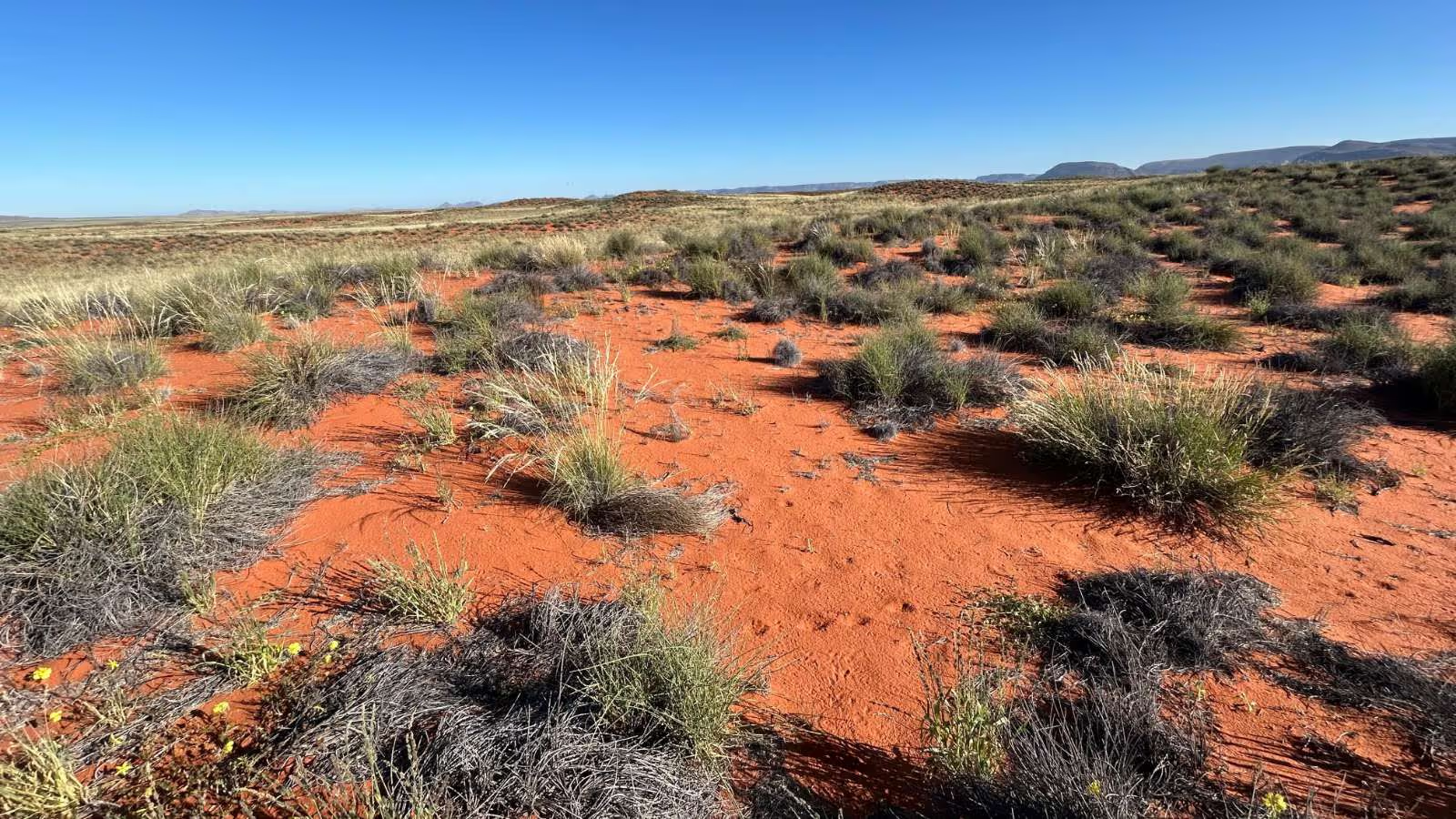
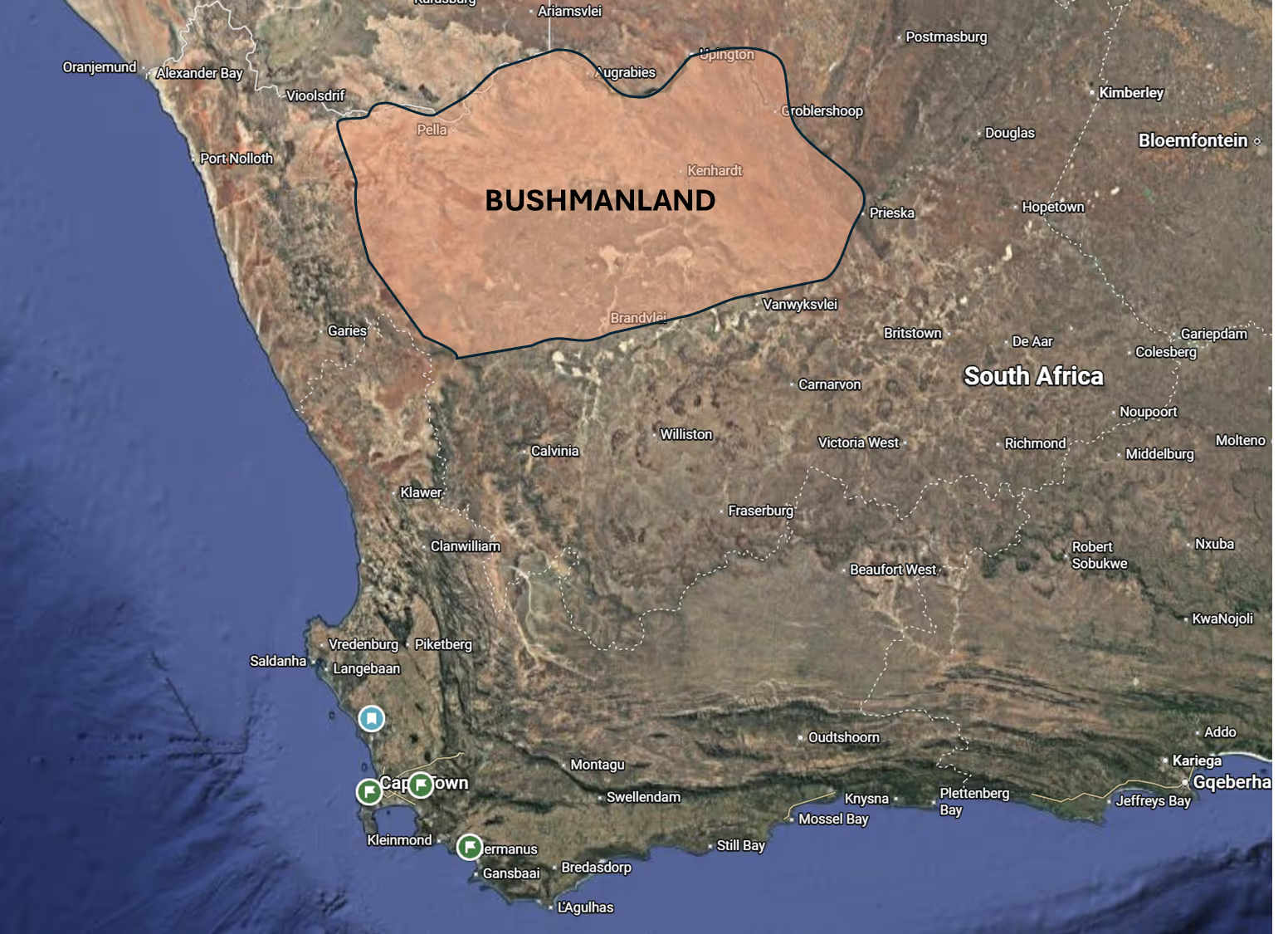
Bushmanland is a vast interior plateau that stretches from south of the Orange River, east of Springbok and west of Kenhardt, with the southern boundary being around Calvinia and Loeriesfontein. It is a transition zone between Namaqualand and the Karoo biome further south and east. The topography is mostly huge expanses of flat plains interspersed with isolated inselbergs, providing a visual (and species) relief from the plains.
There are very few towns, given the remoteness, but you may have heard of Pofadder, which lies about 200kms north-east of Springbok. The only other notable town is Aggeneys, which is a mining town close to the Orange River, about half way between Springbok and Pofadder.
And that is more or less it.
That may be why it is considered to be as remote as you can get in South Africa. It certainly makes for an incredible getaway if you want silence and peaceful birding.
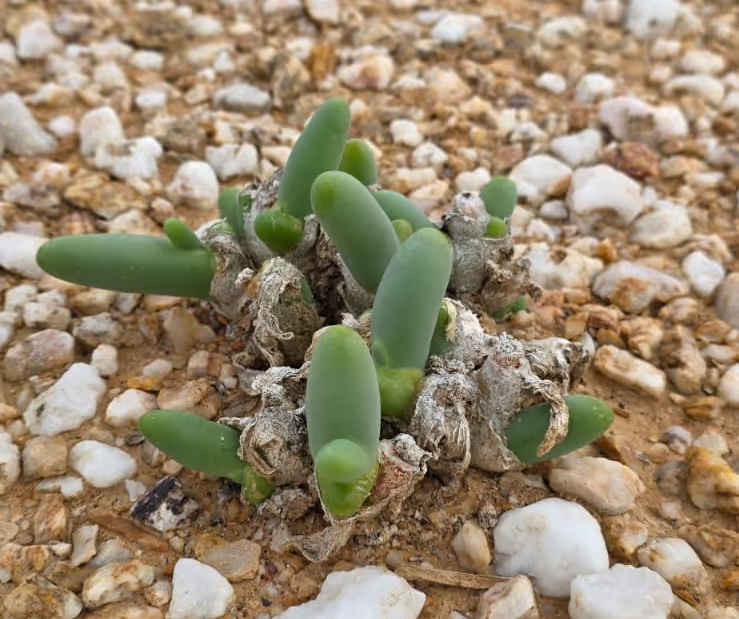
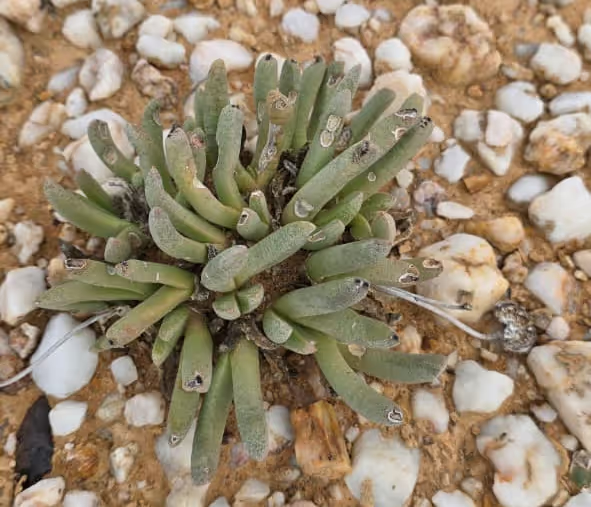
The plains are covered with sparse wispy grass (largely dependent on the summer rainfall) and pockets of succulents amongst the rocks and gravel, and with the inselbergs also dotted with succulents, including iconic kokerbome.
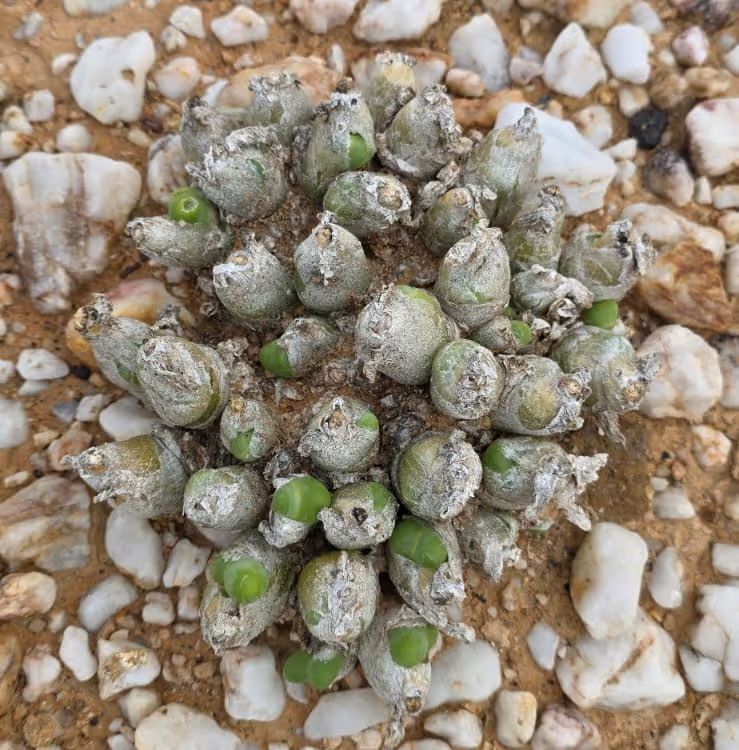
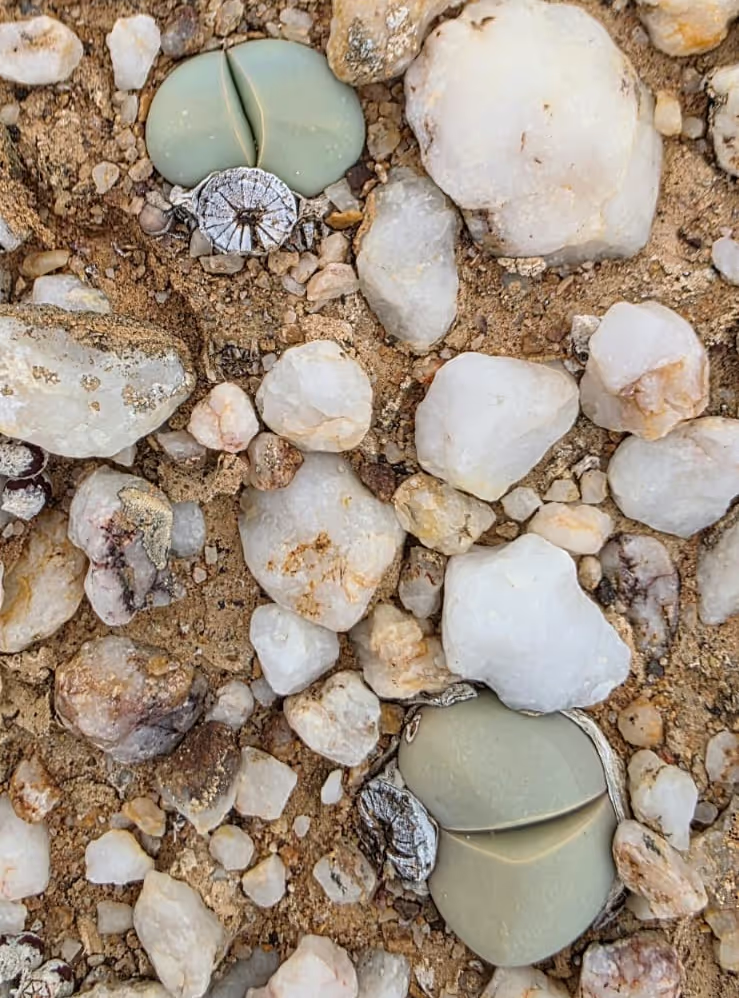
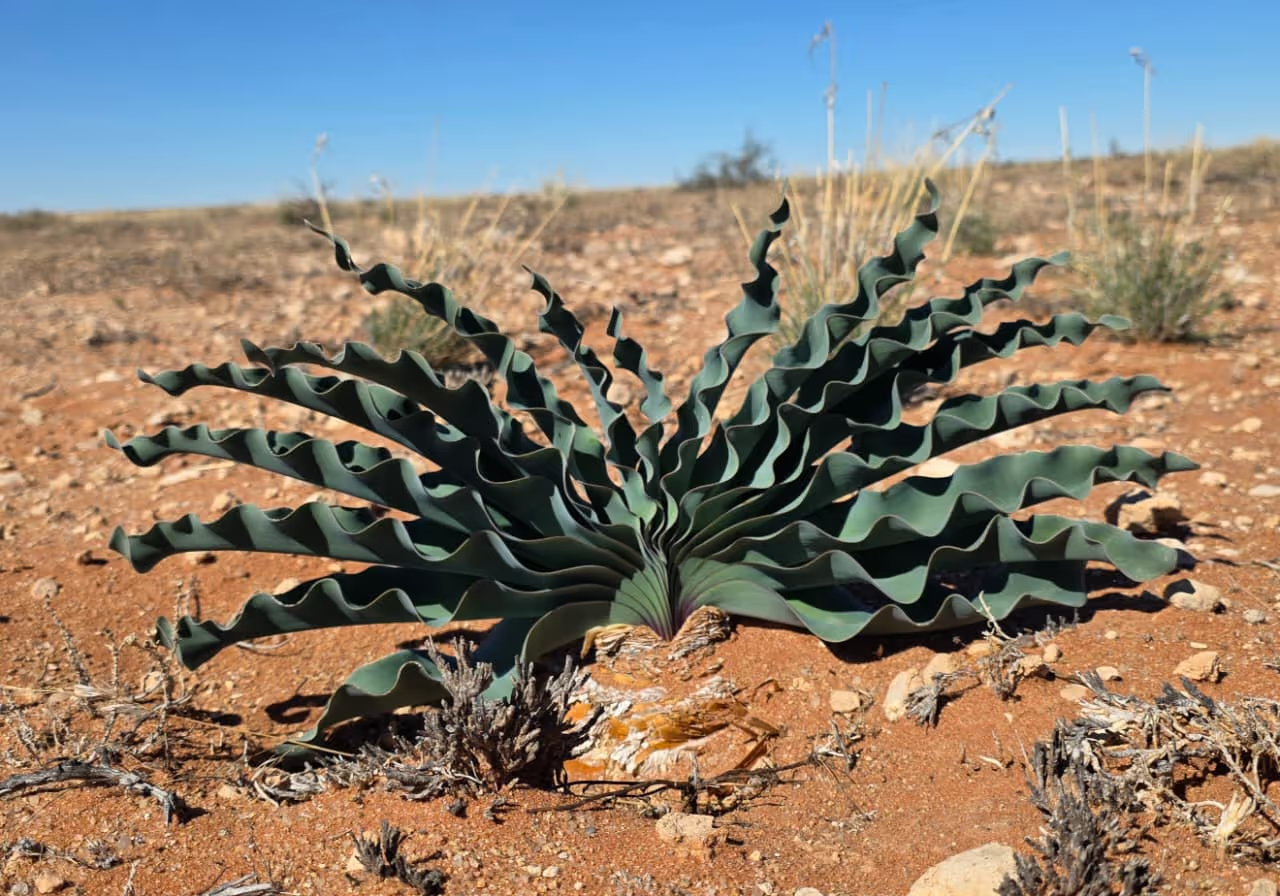
And, yes, there are some incredibly special birds, with the potential for so many classic South and Southern African endemics.
One could argue that many of the endemics found in Bushmanland can be seen with far less travel, closer to the major cities, but there is one bird that only occurs in Bushmanland, and it is certainly THE poster bird for the area - Red Lark.
I often think about the concept of “Pilgrimage Birds”, which tend to mark the dedication of a South African birder.
Birds like Green-headed Oriole, Olive-headed Weaver, Green Barbet and Angola Cave Chat, where very specific travel to a very specific place is required to see them, and I will argue strongly that Red Lark fits that category.
I had seen Red Lark on a few occasions many years back in my last trip to Bushmanland with my father, but I had never photographed one, and so it was an easy decision to marshal some birding troops and make a weekend of it.
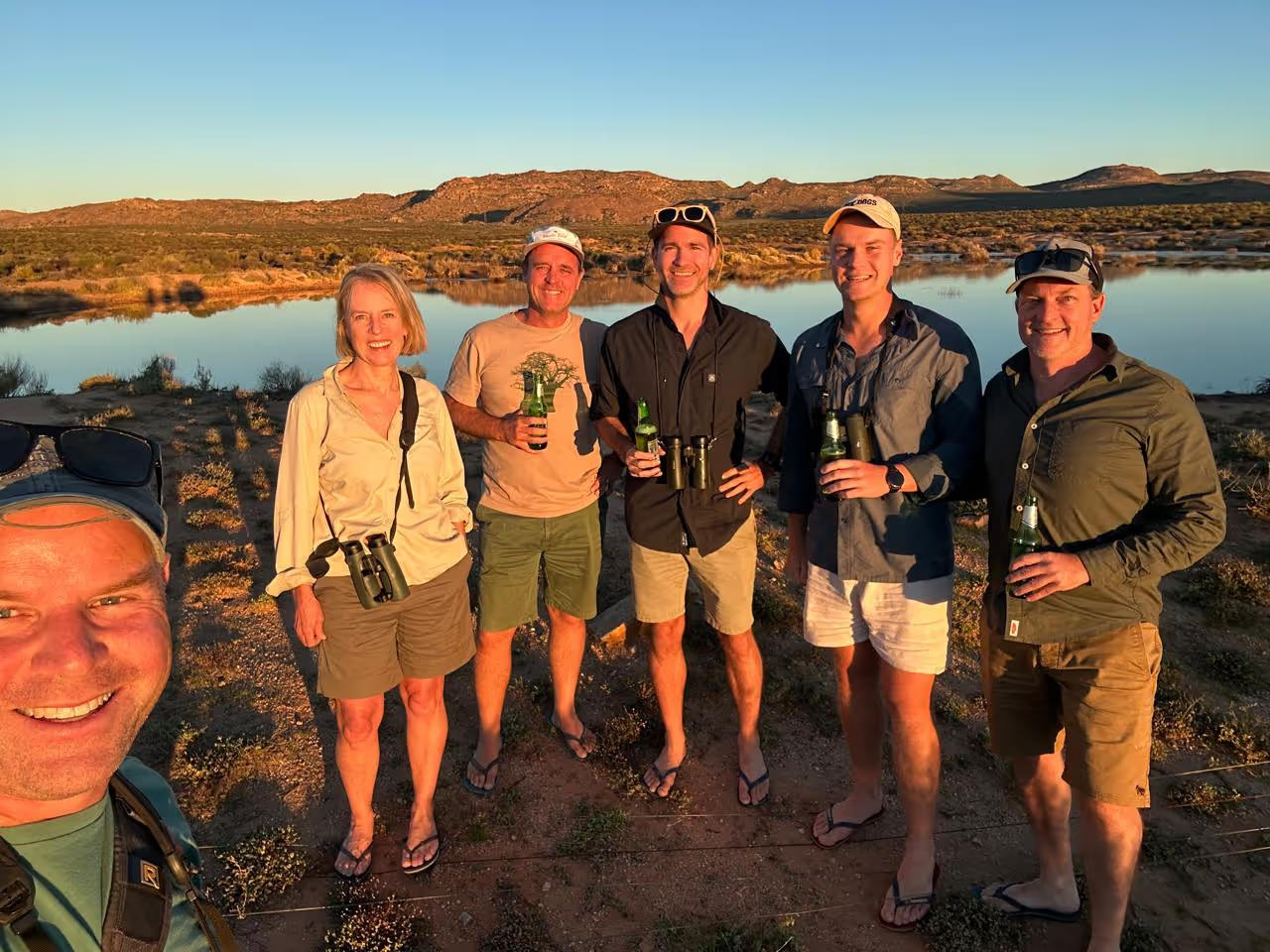
My companions included Tommy, Pete, Kiernan, Gareth and Irene and we headed north on the Friday public holiday. The long drive of six hours north meant a very early start and very little en-route birding.
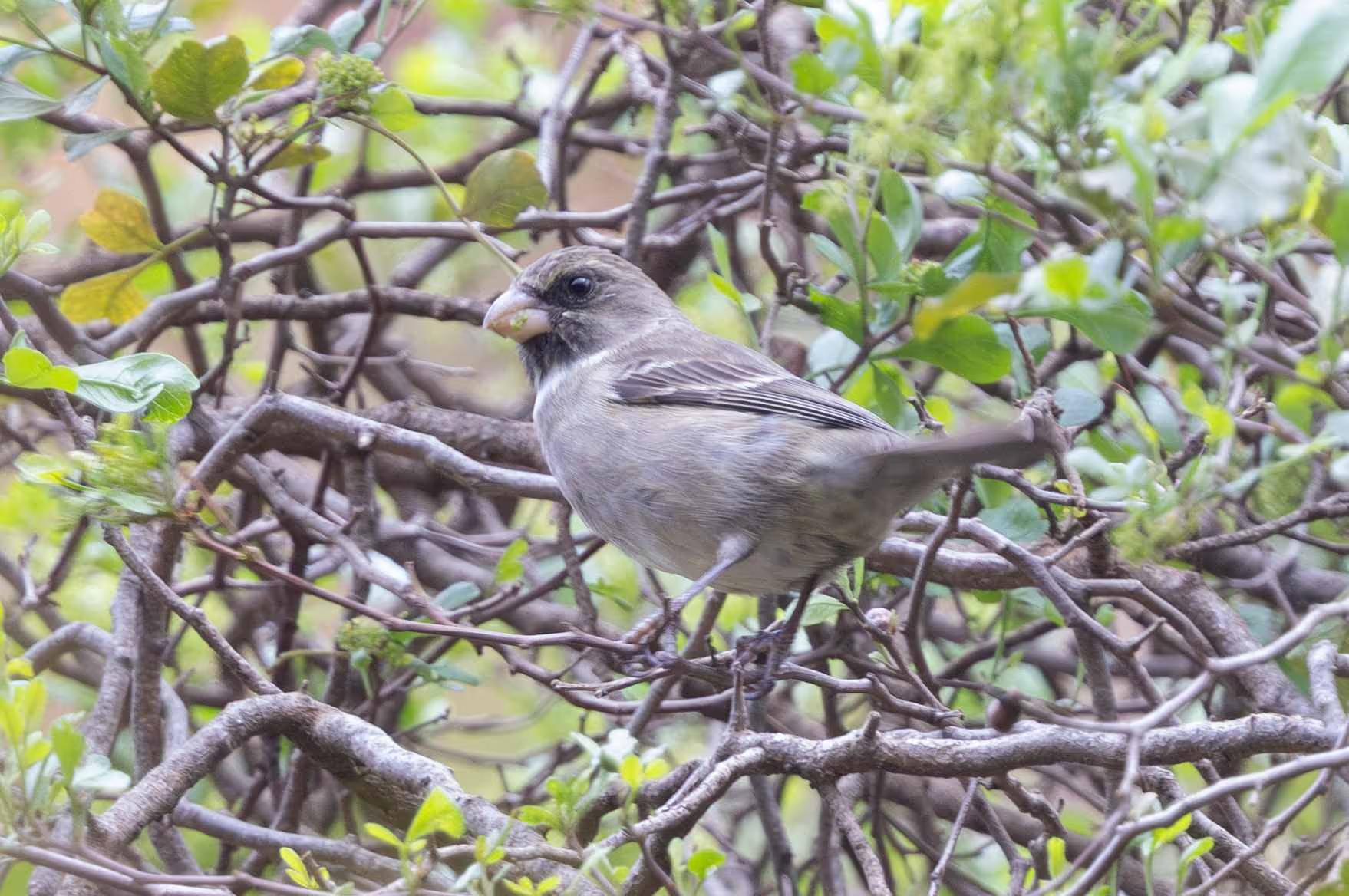
We stopped for the obligatory Protea Canary for our Autumn Challenge lists at the classic Paleisheuwel site near Clanwilliam and managed to find a single bird before moving on. It is known as the "classic site" as it is just off the N7 and makes for a convenient place to stop on the way to Namibia, but I can vouch for the fact that there are many easier places to find Protea Canary.
I have a suspicion too that the substantial population of Streaky-headed Seedeaters in the kloof make for a potential overstatement of the reliability of Protea Canary in that area. We do, however, have some photographic proof (no matter how poor the image may be).
Since I mentioned the Autumn Challenge, it is worth mentioning too that it was the last weekend of the challenge and, yes, my eyes were set on trying to finish on top. I had been lucky enough to get out on the first weekend of the challenge on a long weekend in Polokwane, Magoebaskloof and Johannesburg, and so I found myself in second place on the way north. My good mate, Stu Slater, was equally vying for top spot, but a combination of poor timing and poor planning had meant he was not sitting in the car with us. He was going to have to watch the leaderboard anxiously over the weekend.
They do always say that "a failure to plan is planning to fail".
I started off about 10 birds behind, but there were about 35 potentials, so I was feeling bullish.
With the Protea Canary under the belt, and one of the 35 targets that I needed, we headed directly to our base accommodation in Springbok.
Springbok is a well-known Namibia gateway town, but we were comfortable calling it the Bushmanland gateway town as well. We stayed in a brilliant AirBnB called Chefs@6, with the best braai facilities I’ve seen in a while, a great Checkers (there is even Sixty Sixty operating in town) and views of the surrounding koppies, with Verreaux’s Eagle as a permanent fixture as one sips sundowners on the verandah.
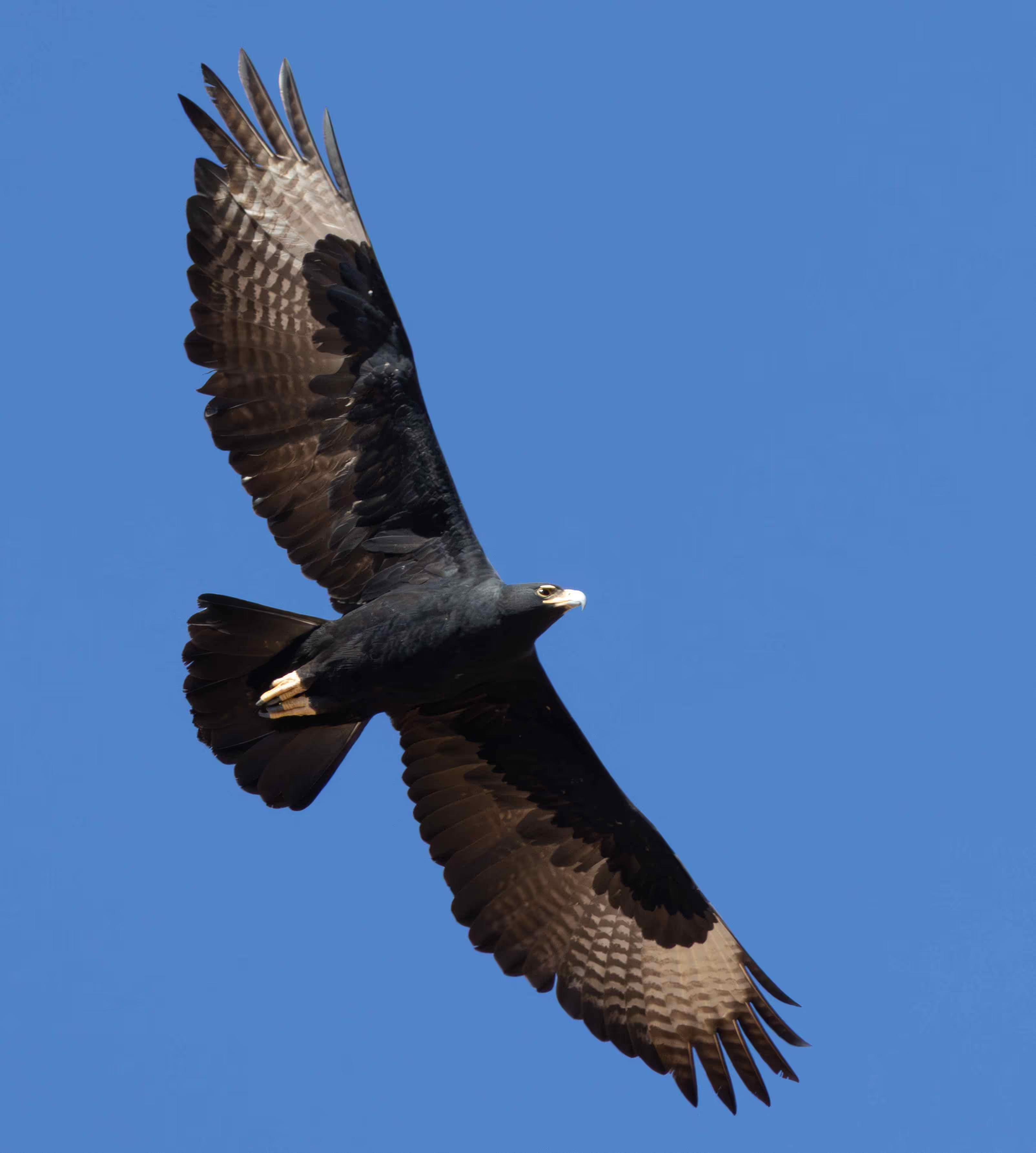
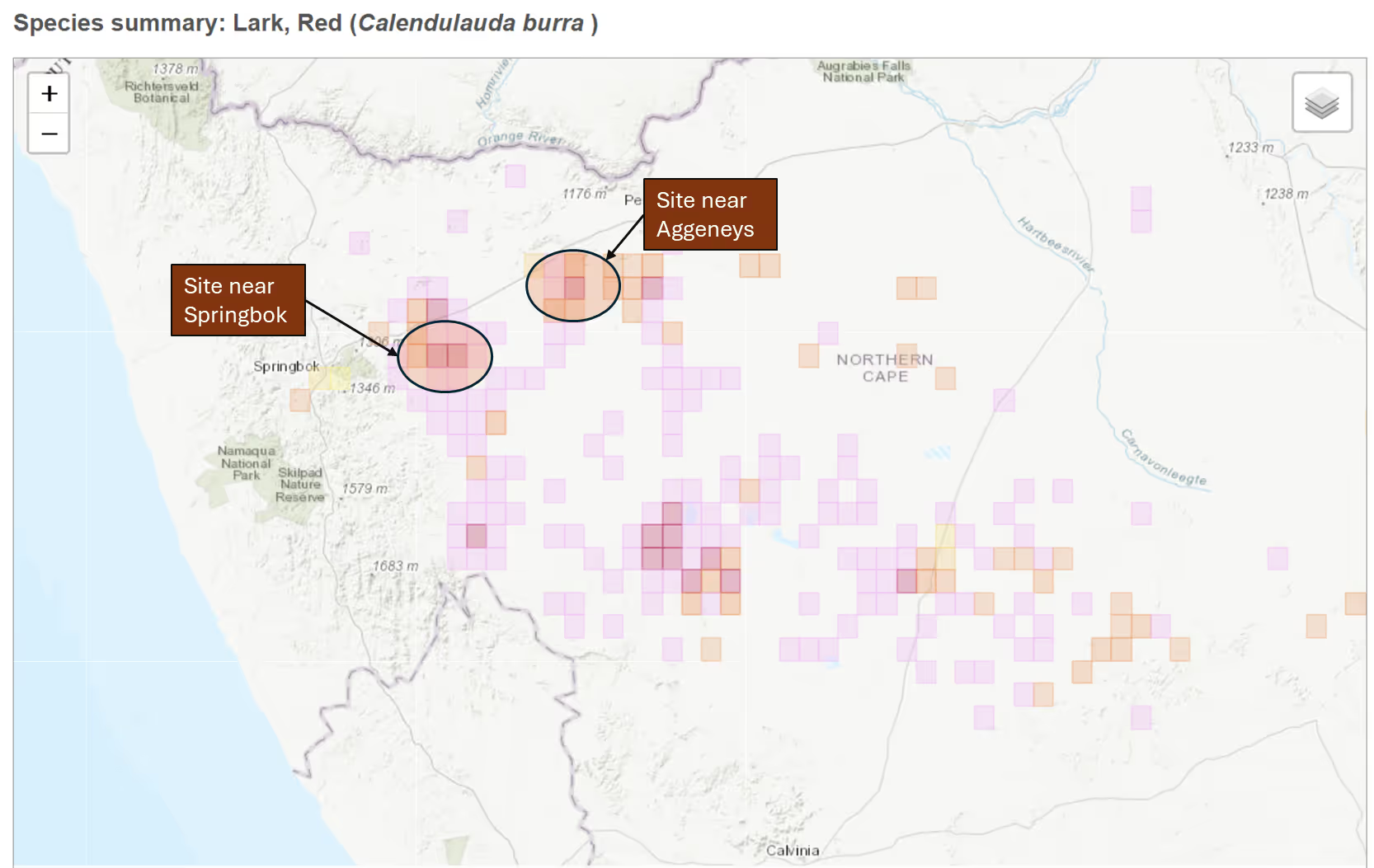
We were not in Springbok to sit around on our verandah, though, so we dropped our stuff and headed immediately east towards the high concentration of SABAP2 sightings of Red Lark.
As a lifer for many in the group, it would have been nice to have it on our lists before the end of day one. We knew we had the classic site of the Koa Dunes near Aggeneys on our itinerary for Saturday morning, but it was too far to travel late on Friday afternoon, so we made our way for the red patches (dunes and high reporting rates) on the SABAP2 heat map about 40kms east of Springbok. It would be a quick drive on the tar road and then a few kilometres south on a dirt road that looked absolutely optimal for some late afternoon birding.
Well, that didn’t work.
One of the downsides of these remote locations is that they are perfect for wind and solar farms and, given the perfect climatic and topographical conditions, as well as the relative difficulty of livestock farming, huge portions of land in Bushmanland have been converted to privately owned and renewable energy developed land.
We turned right at the dirt road we'd seen on Google Maps and stared straight at a huge security gate with, not one, but two stern guards on duty. We were literally in the middle of nowhere and we were faced with an enormous gate and formal security.
It was a fruitless conversation trying to explain that we were innocent birders, and we just needed an hour of access to the property for a bird called a Red Lark. In the distance we could see the huge span of over 40 wind turbines and we knew that our Red Larks were probably foraging underneath them in good numbers. The SABAP2 maps were helpful in letting us know they were there, but our suspicion was that those data were either collected before the turbines were put up, or as part of the EIA, which is always a key part of these developments.
And that was essentially the theme on the N14 between Springbok and Aggeneys – miles and miles of perfect habitat but no way to access it aside from peering over large fences with the sounds of large trucks whizzing by.
This wasn’t the silent and soulful birding retreat we had hoped for.
Given the dropping sun and our growing desperation for some birds, we made the most of our situation and stopped at a random spot alongside a fence and listened in between the rumbling trucks speeding by on the N14. It was more productive than we had expected with Karoo Eremomela, Spike-heeled Lark, Karoo Chat, White-throated Canary, Rufous-eared Warbler and Karoo Long-billed Lark being a suitable contingent of endemics.
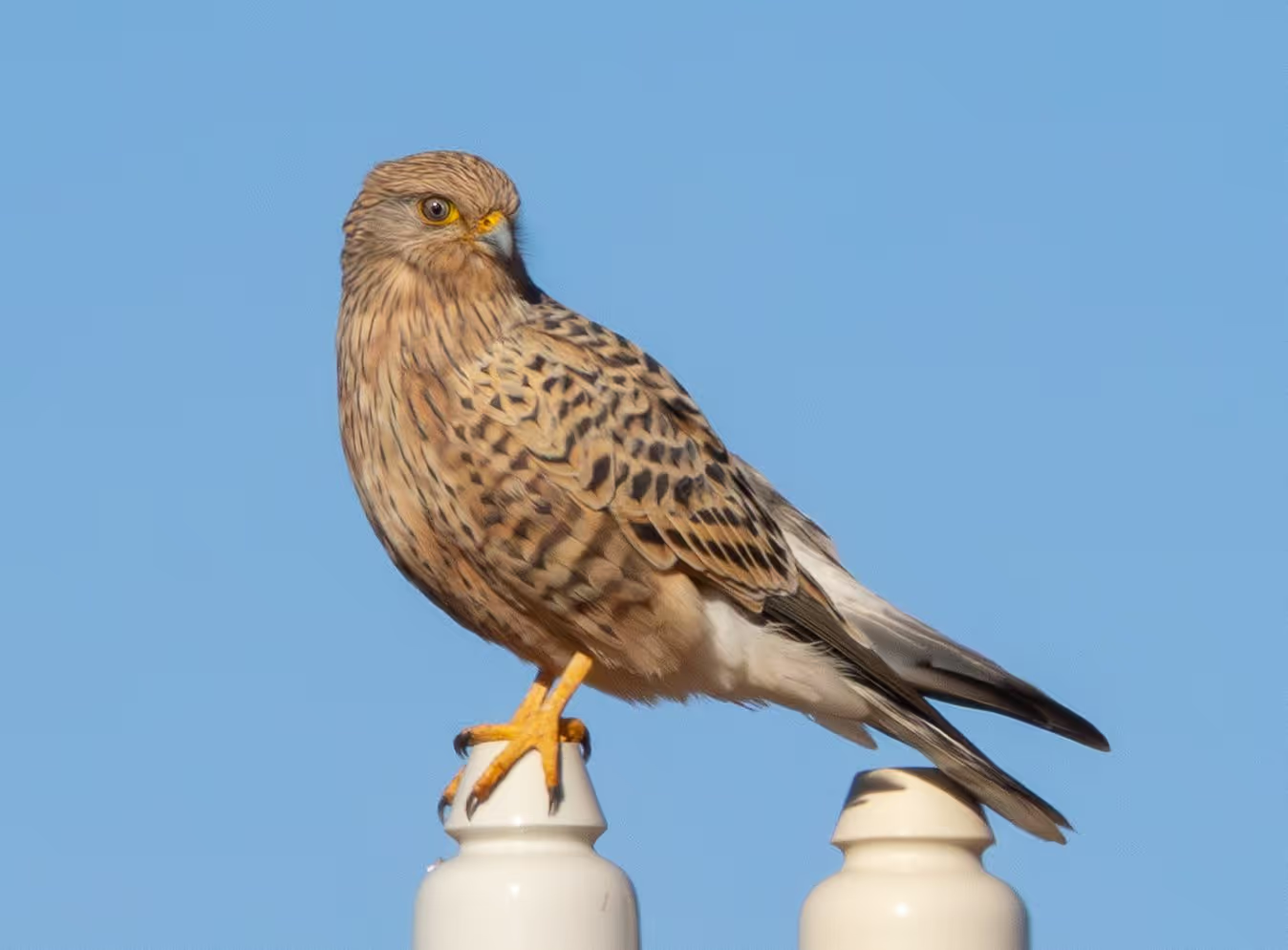
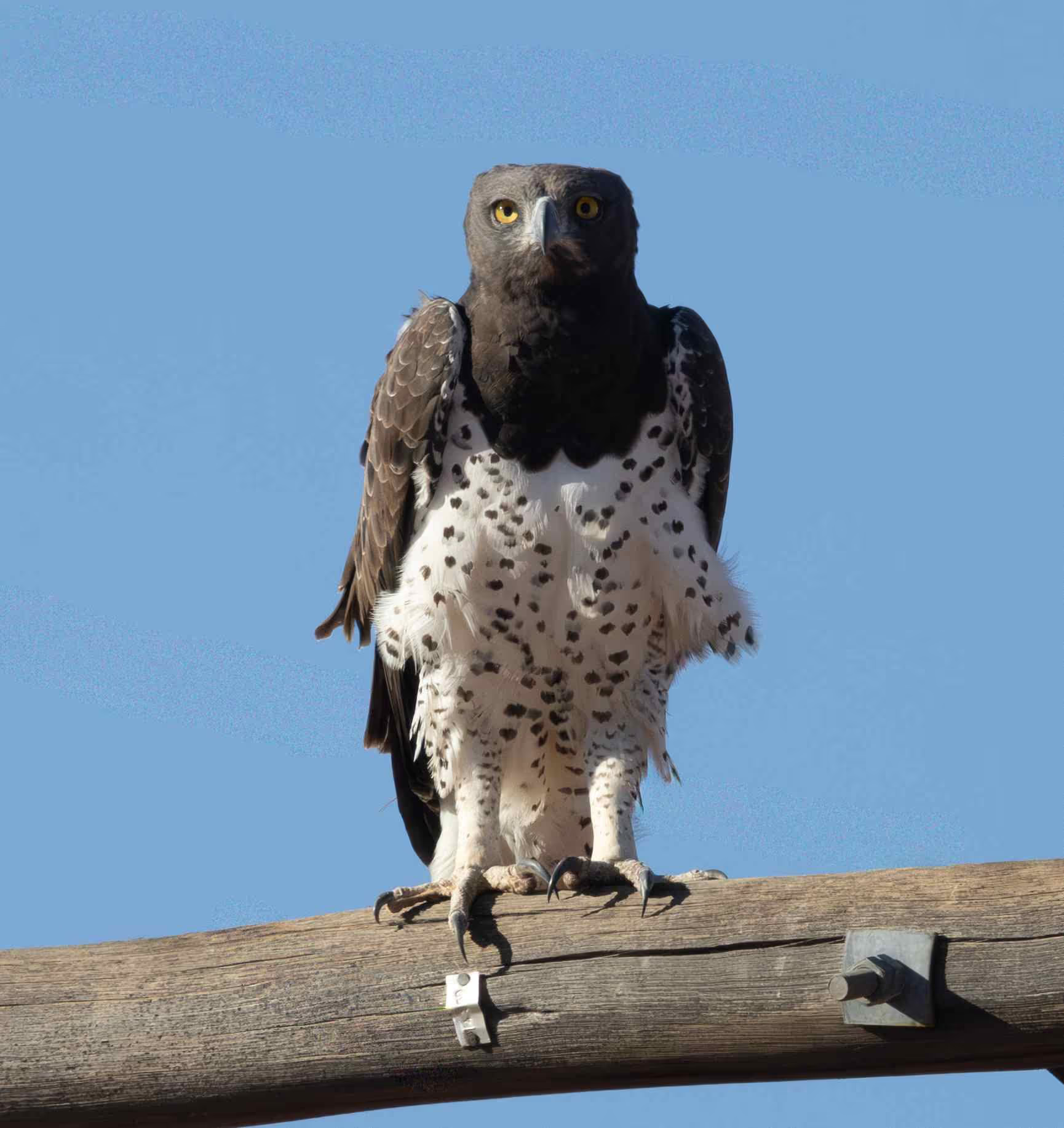
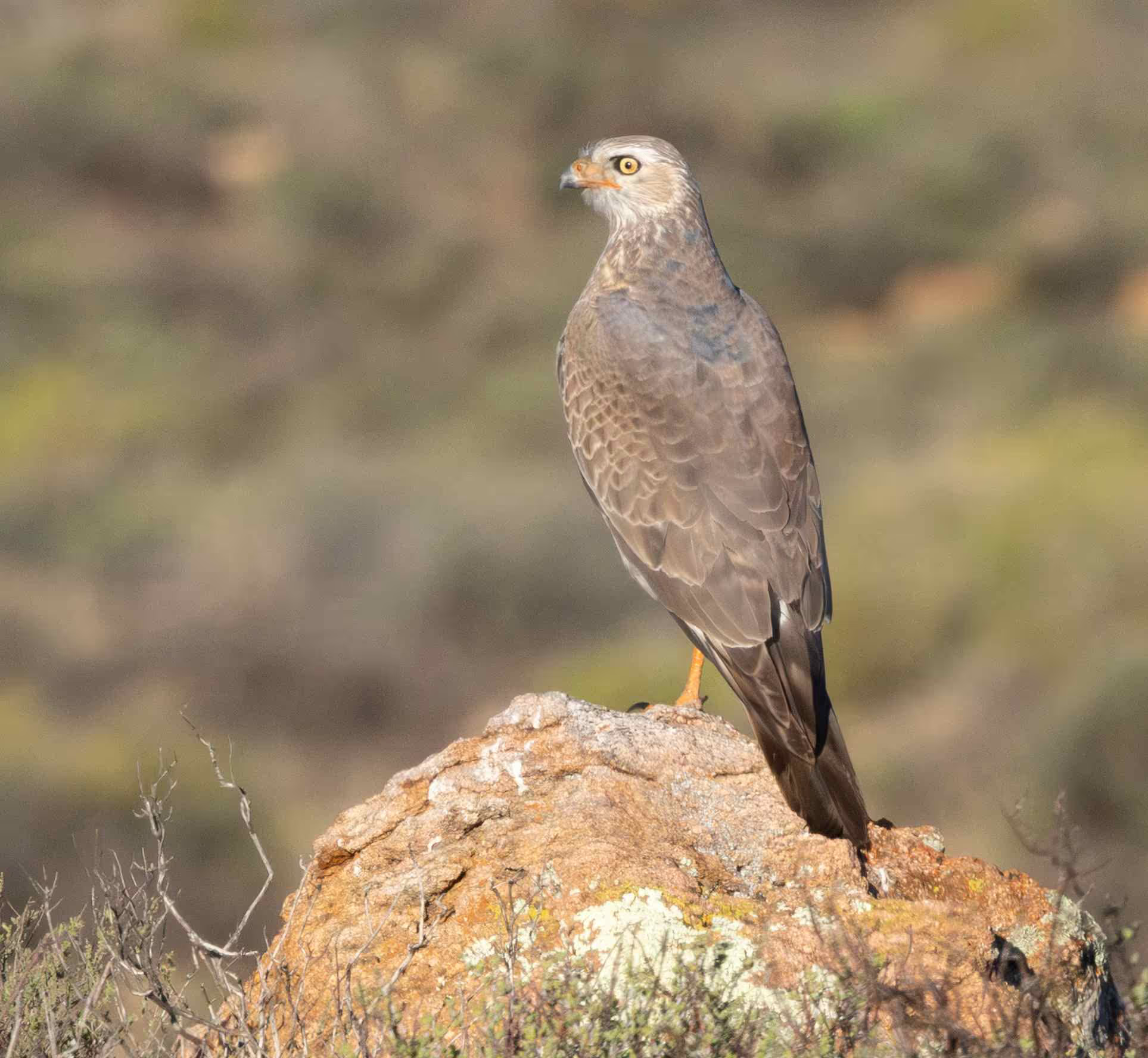
The raptors in Bushmanland are also very noticeable and the classics include Greater Kestrel, Martial Eagle and Pale-chanting Goshawk. Each of them was very exciting for our first sighting, but they became ubiquitous after a while and we tended to drive right past them.
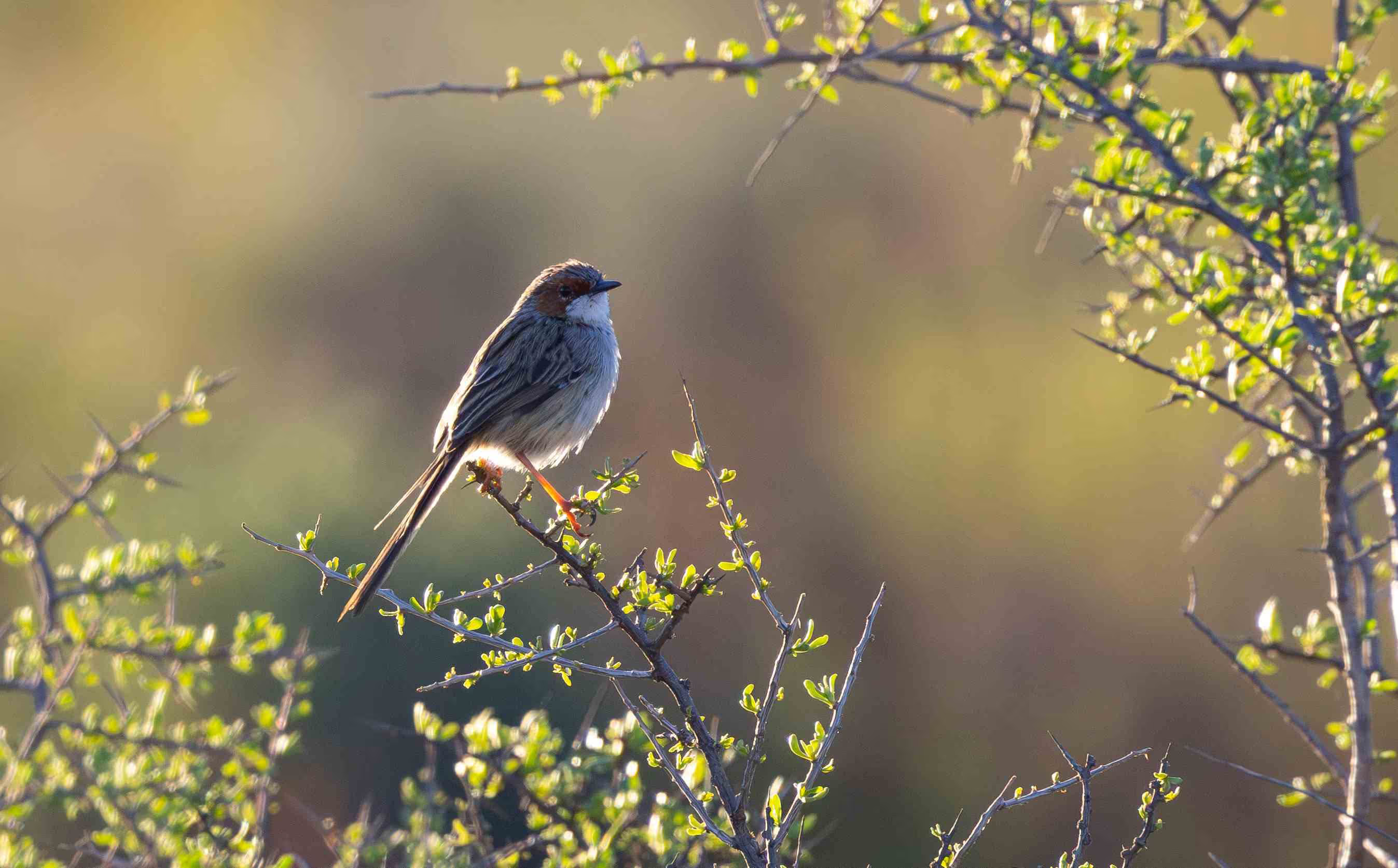
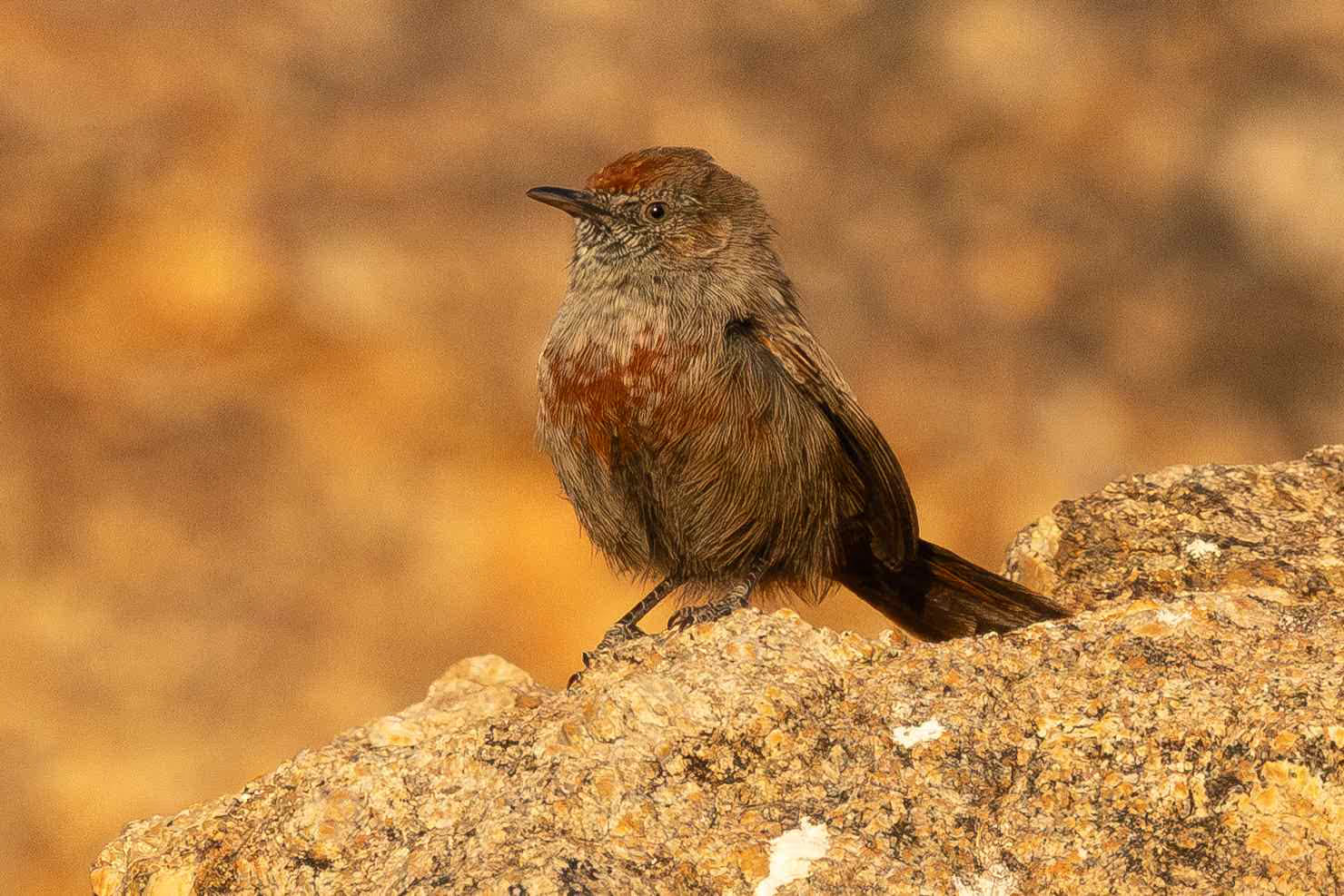
With the sun slowly setting on our first day, we stopped off at a random set of rocks near the small town of Carolusberg just east of Springbok and added Cinnamon-breasted Warbler and Ground Woodpecker to our growing list of endemics.
I am always so pleasantly surprised at the high density of Cinnamon-breasted Warblers in suitable habitat. The regularly trod site of Skitterykloof in the Tanqua is a viable spot, but the birds are so tough to find there. Here in the Springbok area we found a number of birds really easily, including a pair in Carolusberg that put on an incredible show for us. It was also a lifer for one of our party, and signalled the end of a good day in the field despite the Red Lark being a missing feature.
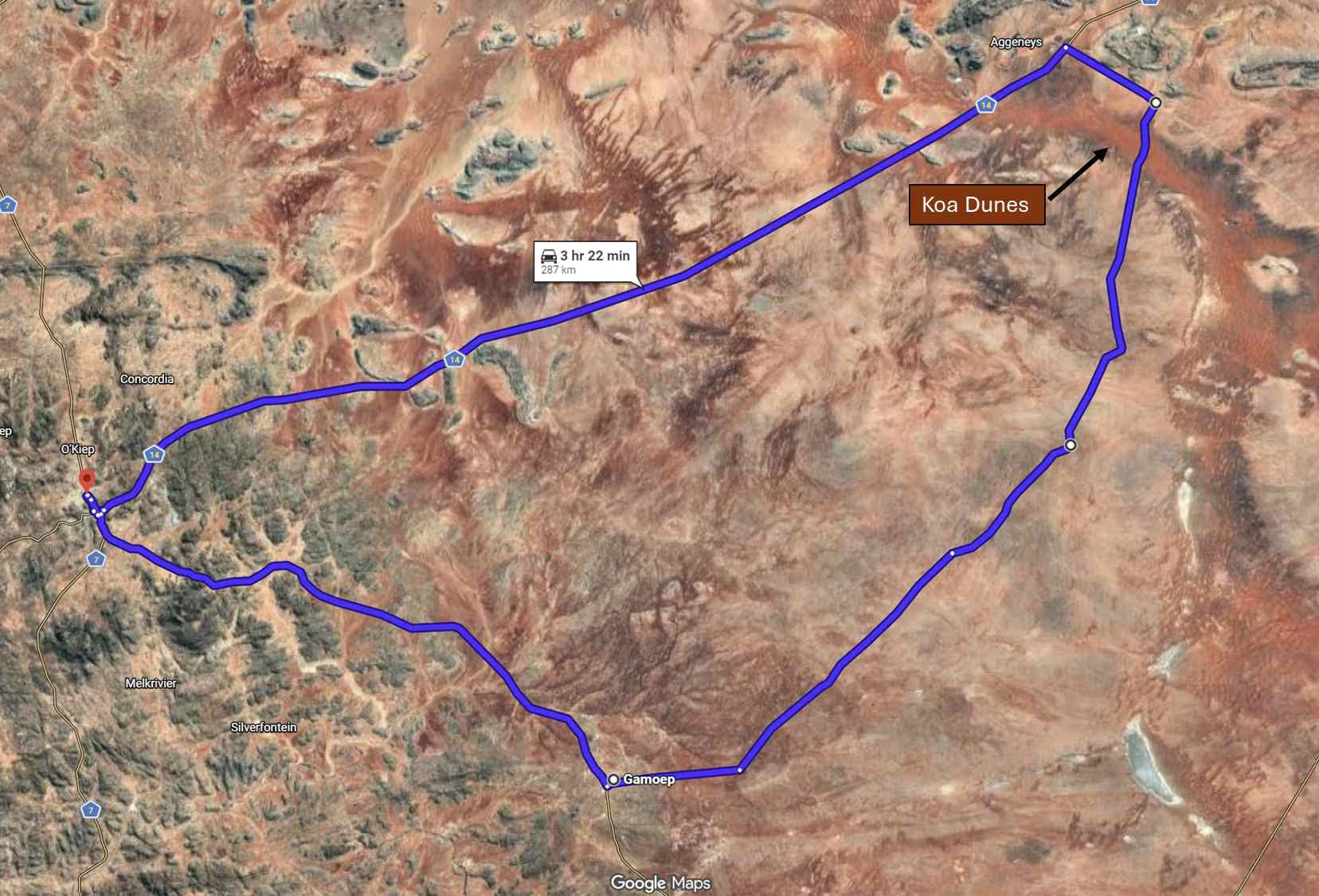
Our itinerary for our full day out in Bushmanland was clearly set. We would leave long before dawn and head directly to Aggeneys on the N14 and then track south for a few kilometres to the well known Koa Dunes, and then work our way west, back towards Springbok with the morning sun behind us. We would traverse all the habitats we wanted, and would give us our best chance for our birds. But, our first priority was Red Lark.
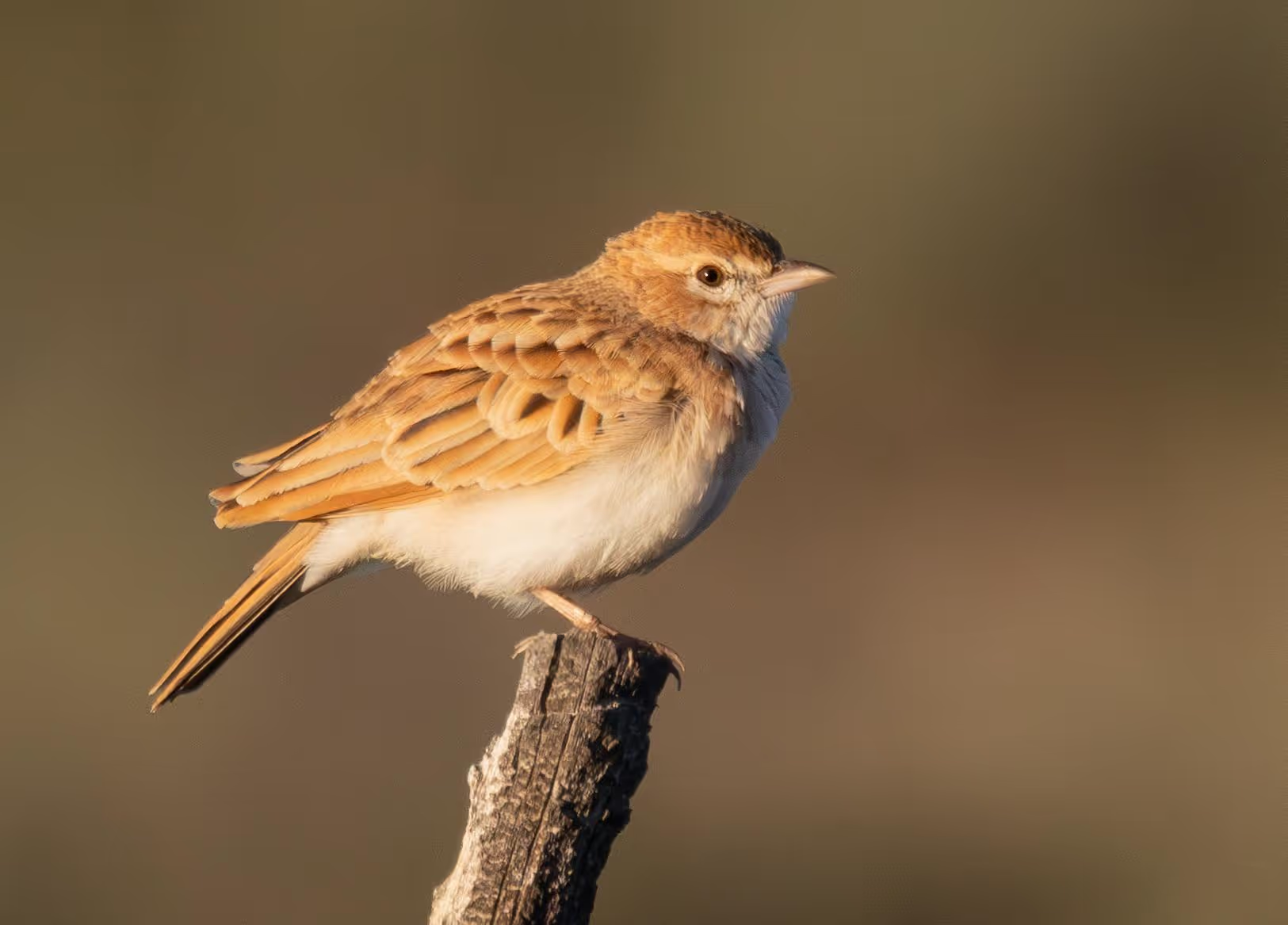
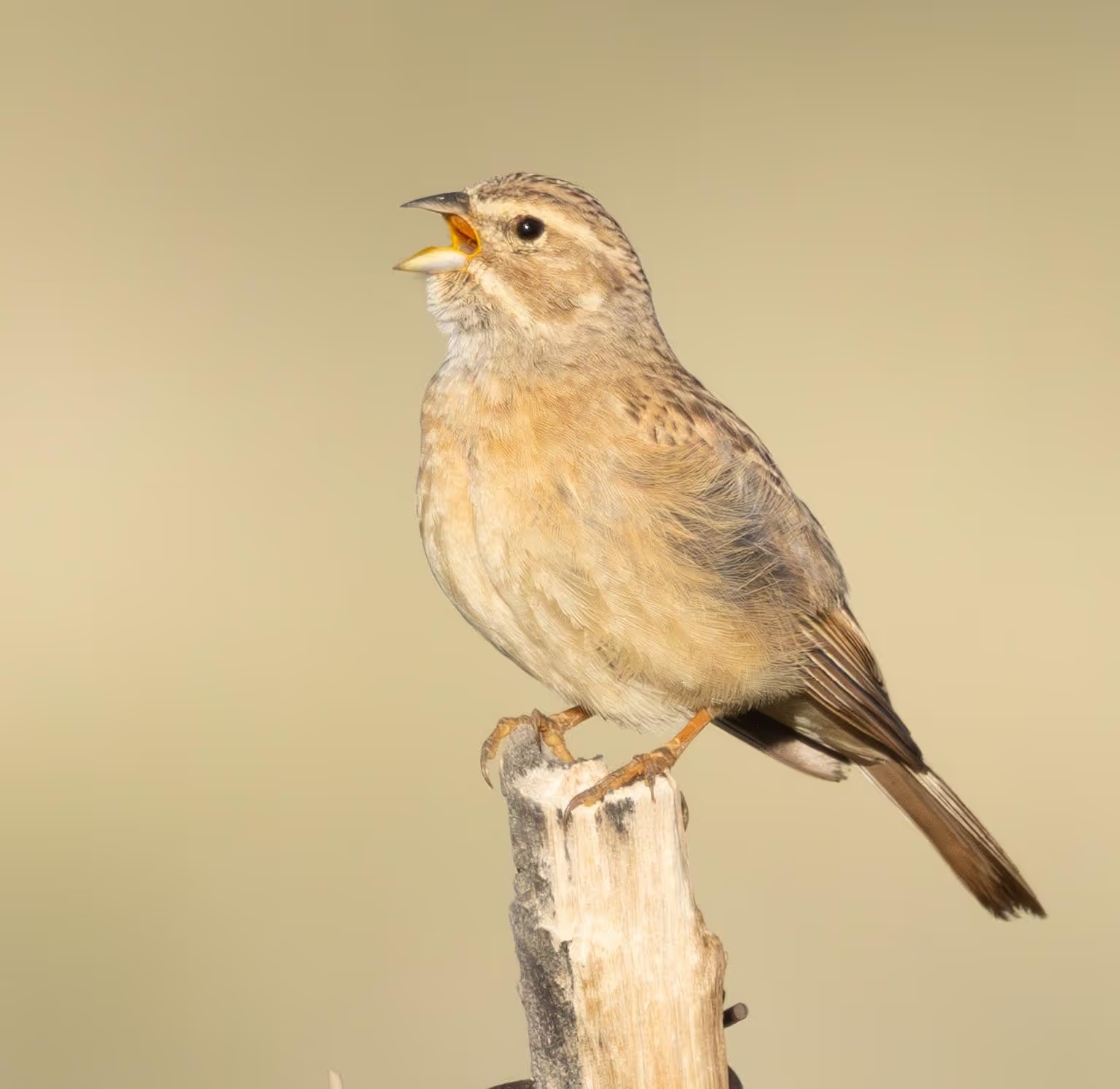
We did not have to wait long. After a few stops on the approach to the dunes for Fawn-coloured Lark, Northern Black Korhaan, Chat Flycatcher and Eastern Clapper Lark, we heard our first Red Lark of the day displaying overhead.
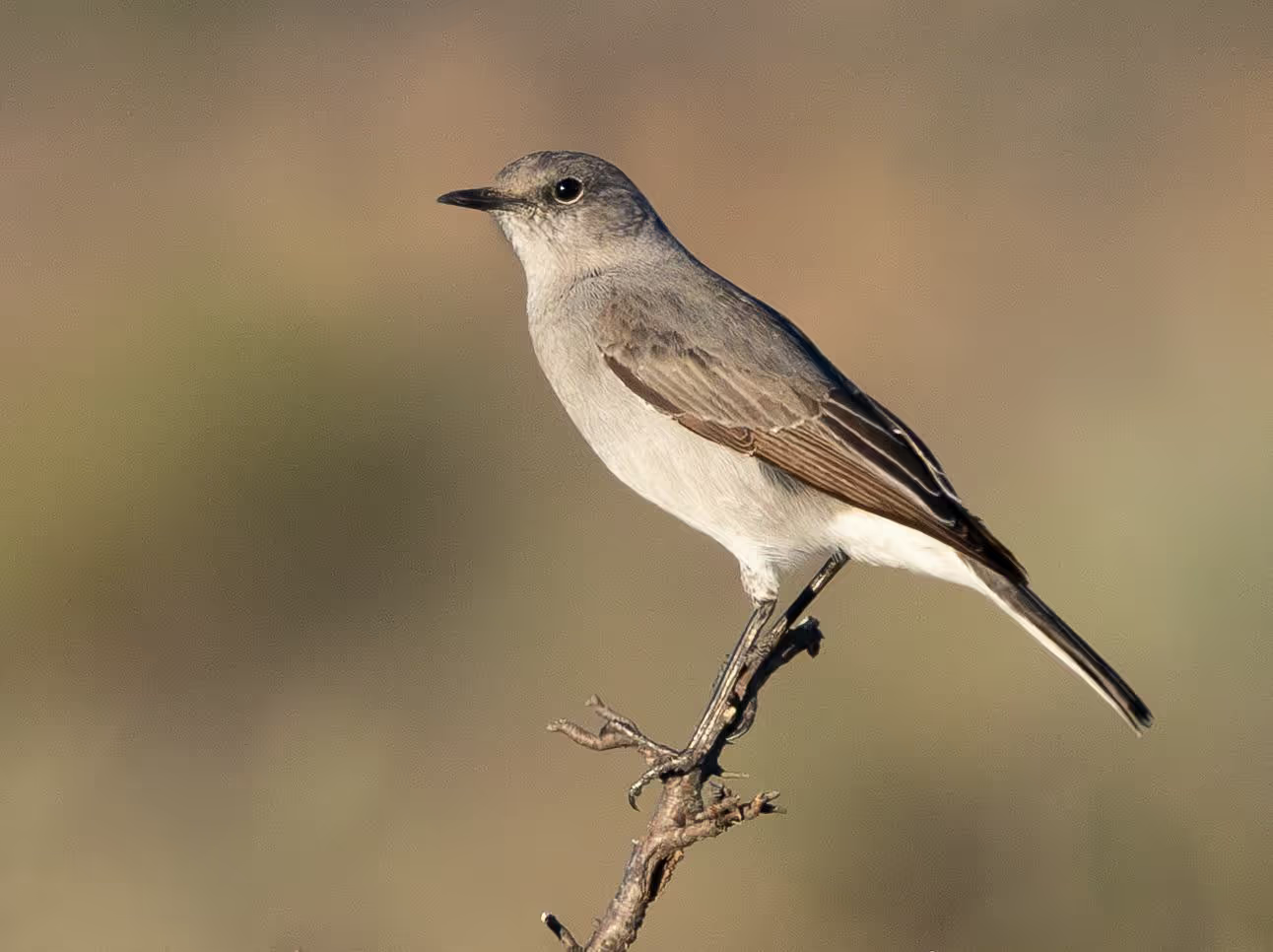
There were a few frustrating moments as it remained somewhere unseen above us but, eventually, it dropped down and perched on top of a prominent twig, giving us the views we had hoped for.
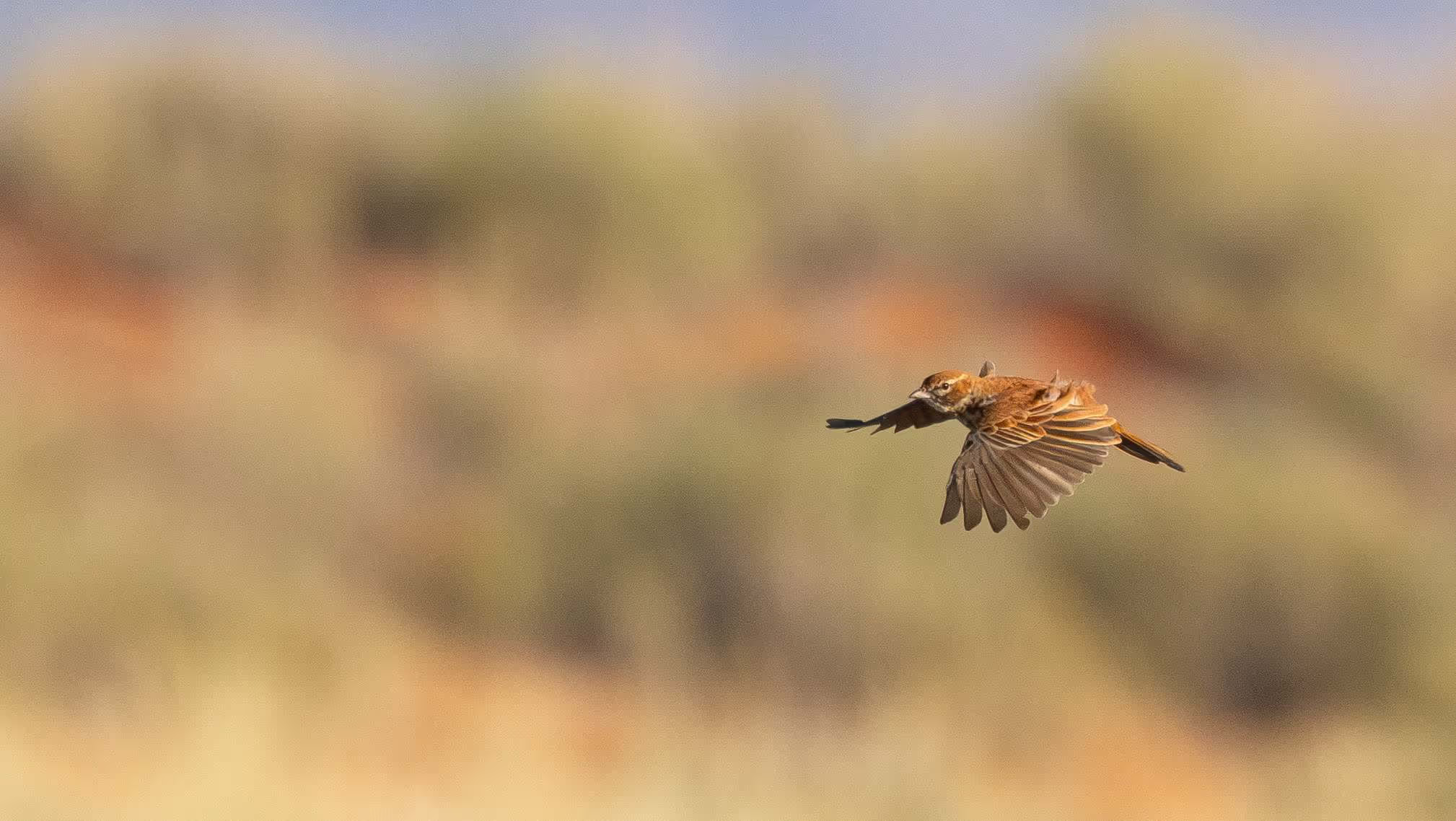
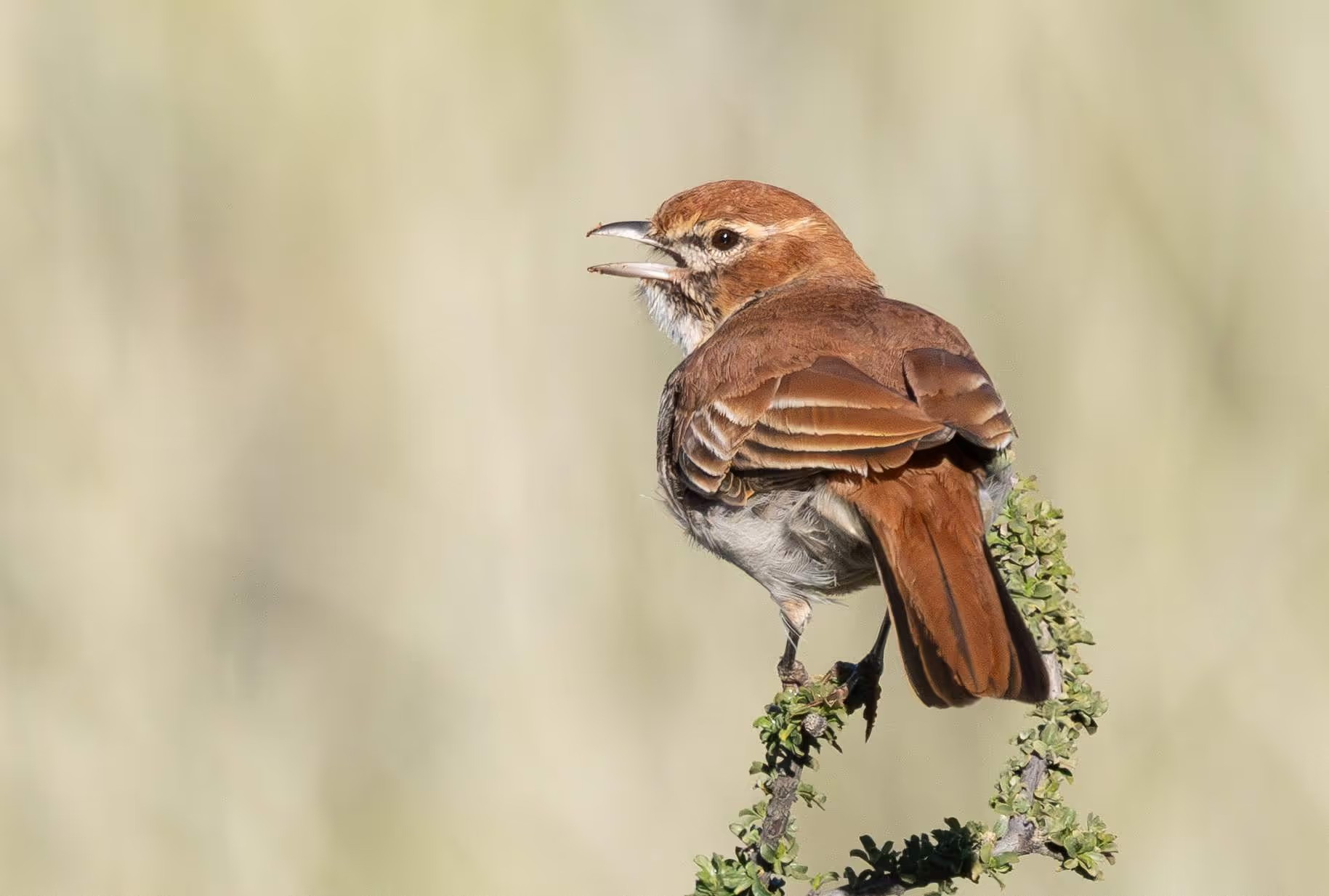
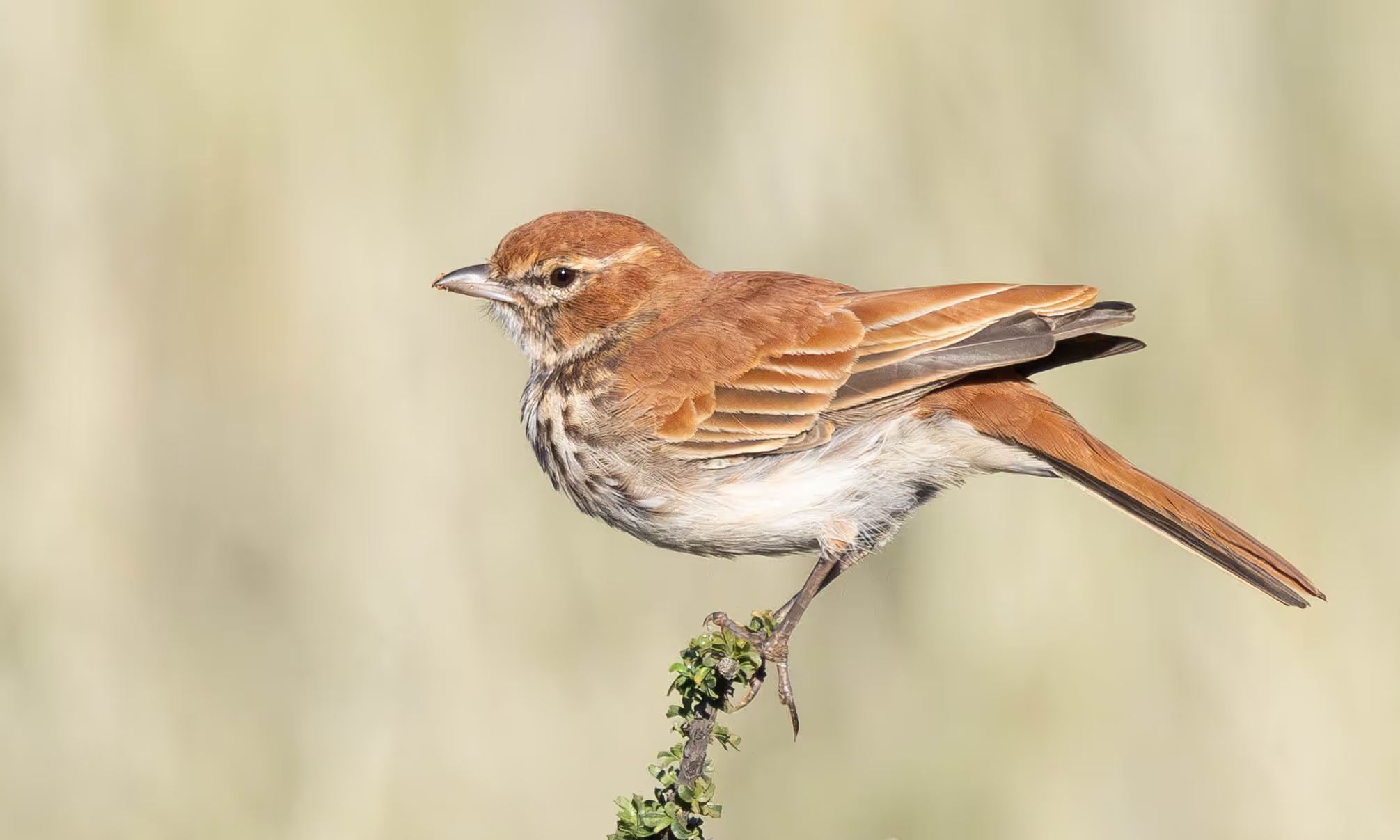
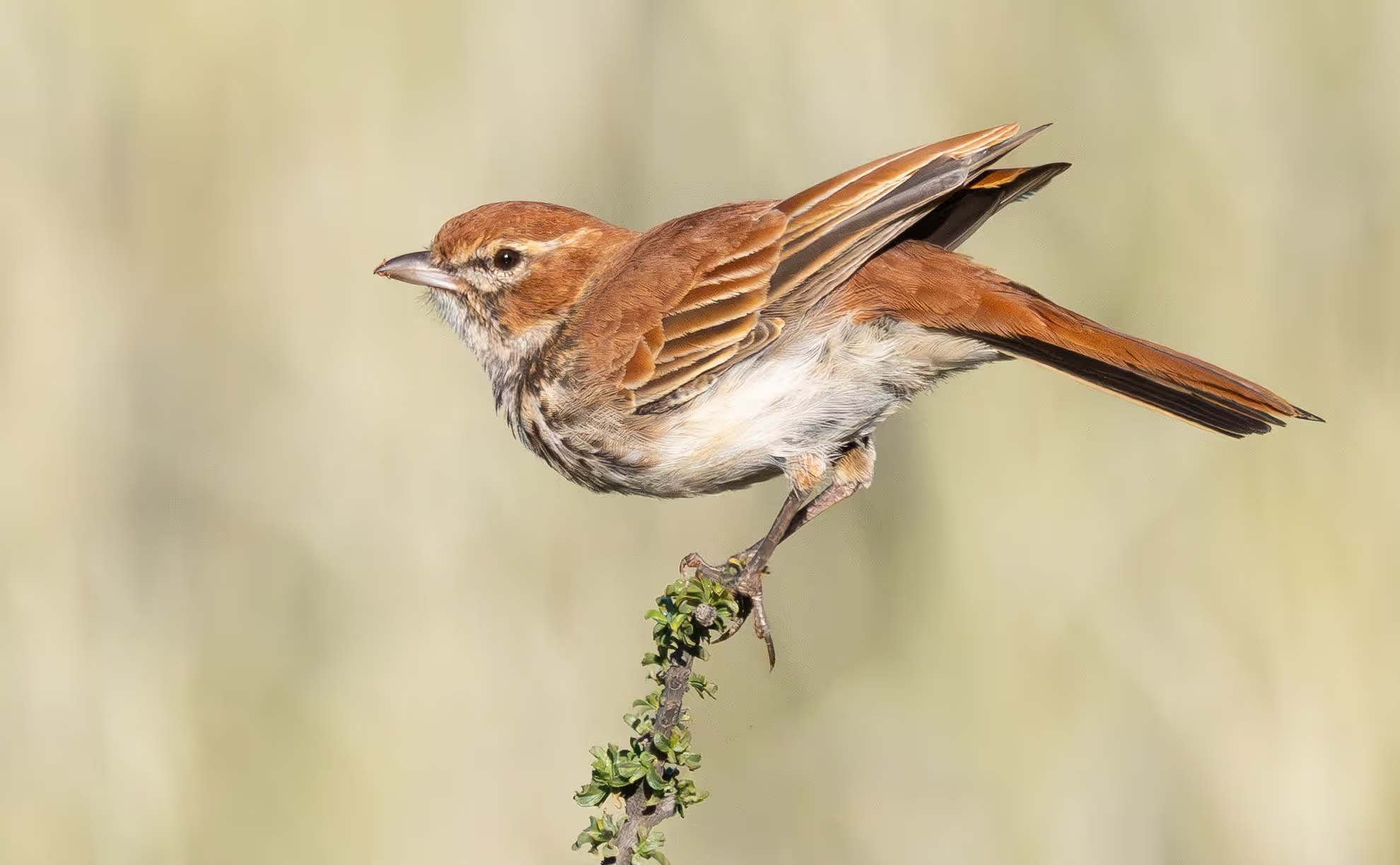
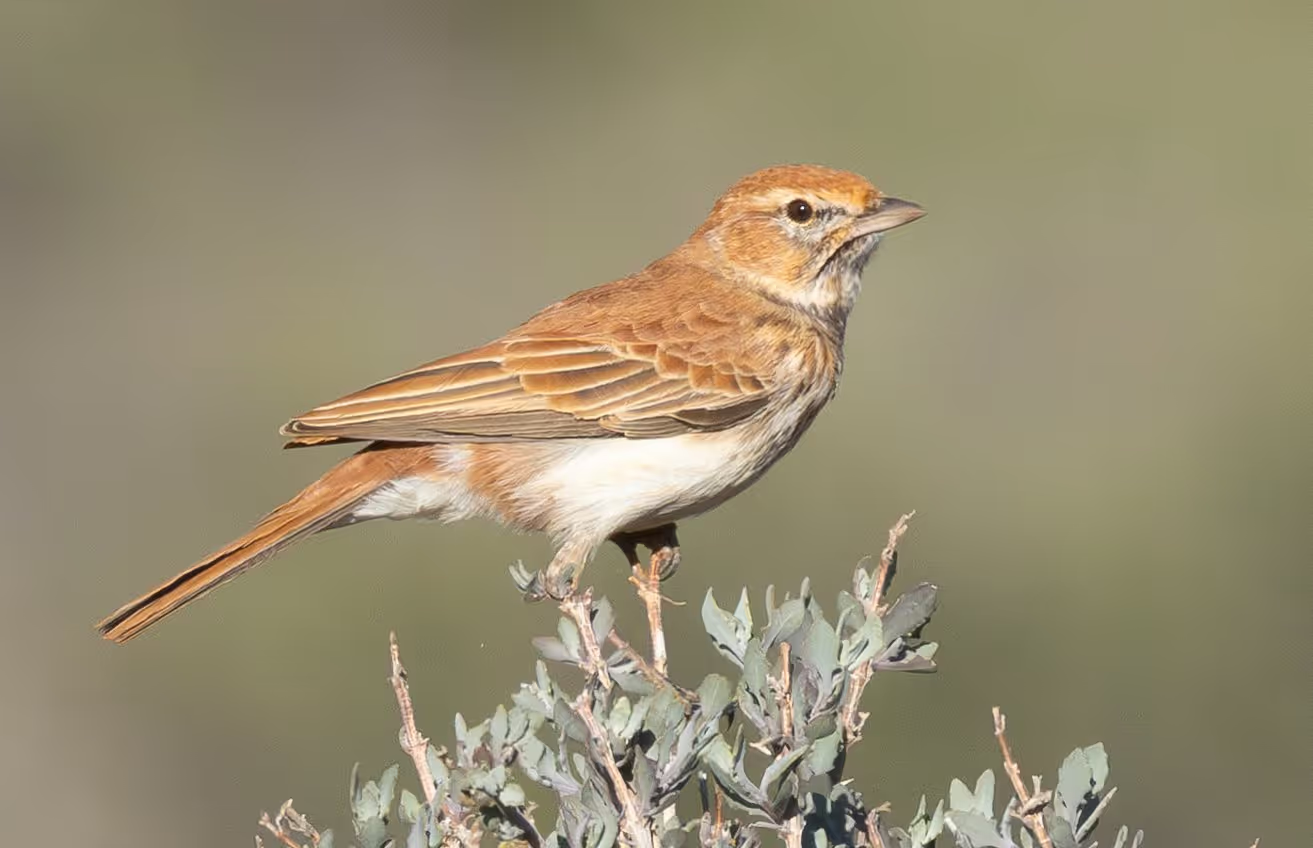
High fives were exchanged amongst the group and I had the photo that I had always wanted of this classic South African endemic. We celebrated appropriately with a packed breakfast, in a beautiful place, on a perfect windless morning.
Most of the day still lay in front of us and so we headed west towards the town of Gamoep, driving the first section through the well-grassed area from the dunes into the gravel plains. The good rains over the summer meant that there was abundance.
Quite an extraordinary level of abundance.
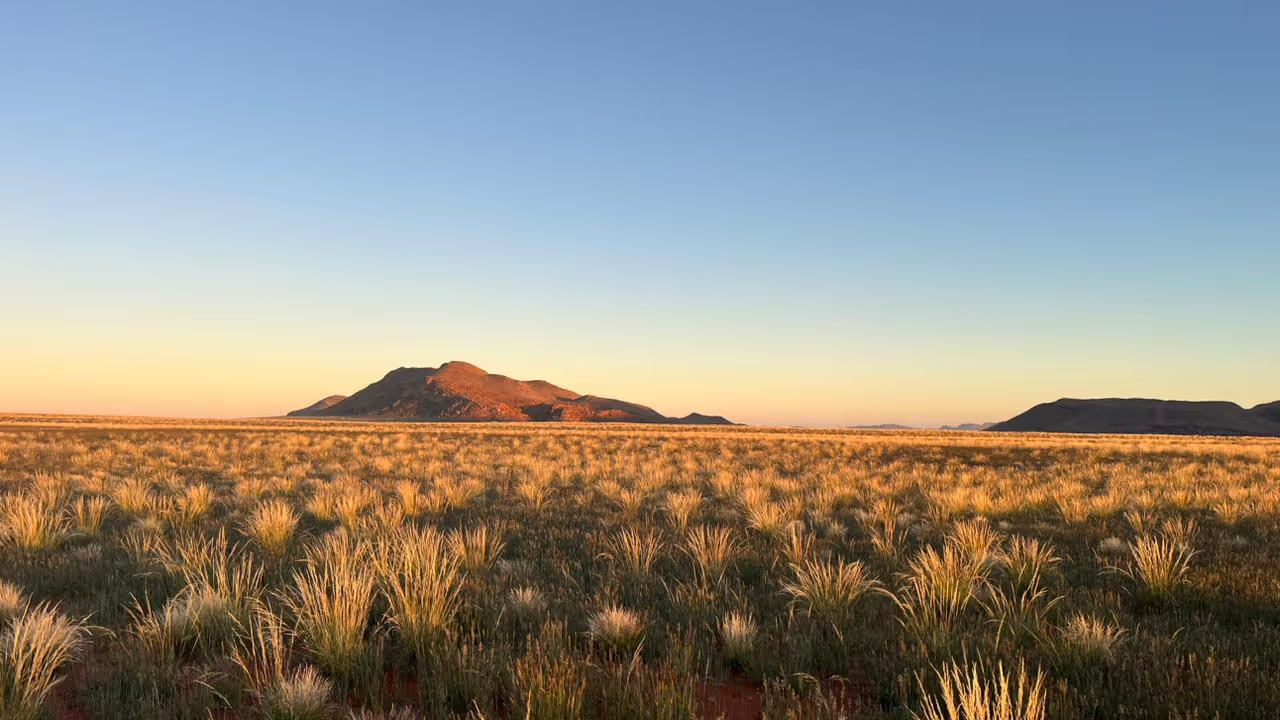
There were literally tens of thousands of Grey-backed Sparrowlarks flying over the grass and landing in the road in front of us. I used the word pestilential, as I had never seen so many of these desert birds in such big numbers. Their buzzy calls together with the hundreds of Lark-like Buntings drifted across the plains as they swirled and swarmed, making the most of the bounteous conditions.
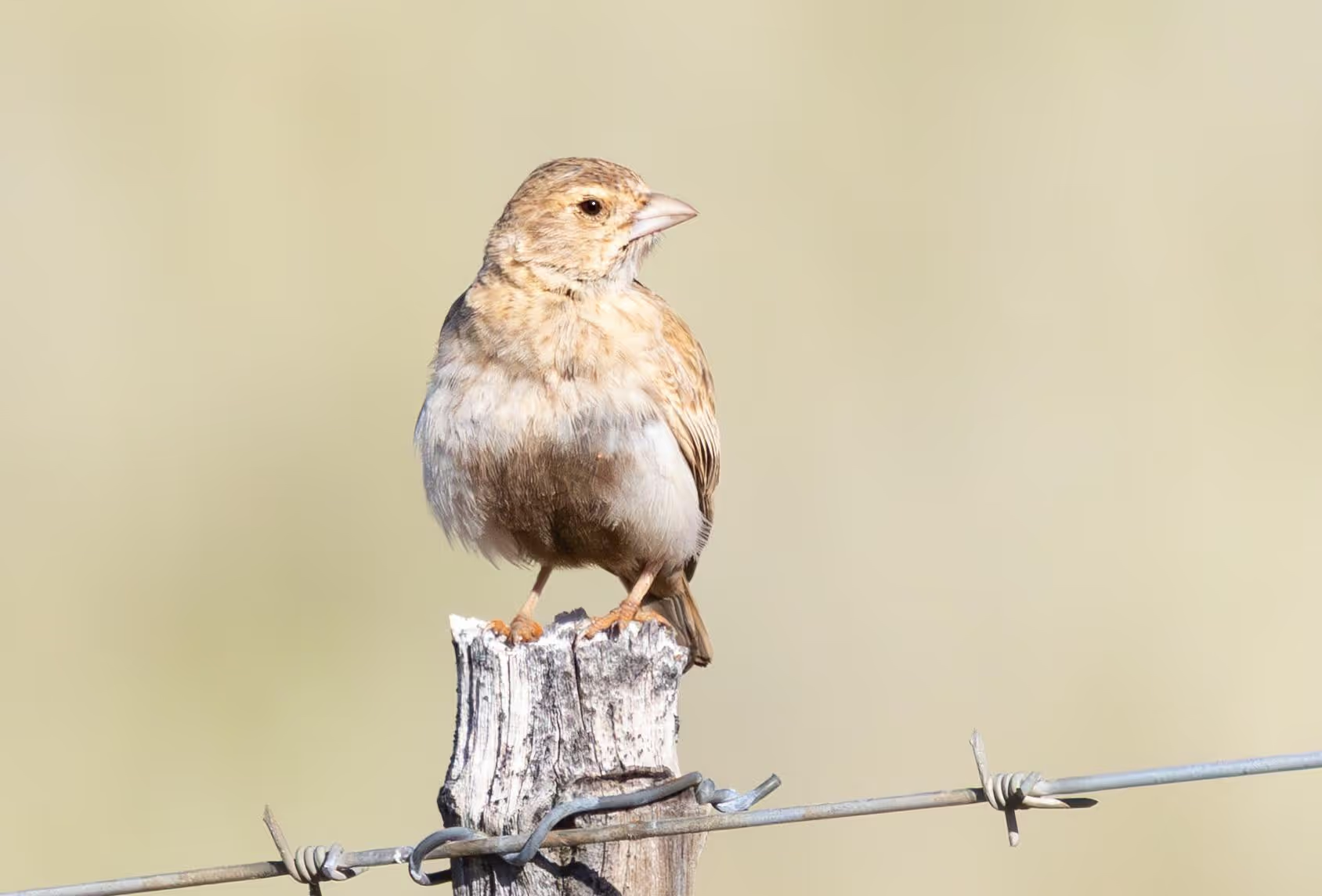
Another target bird for us was the unpredictable and nomadic Black-eared Sparrowlark, also a tough Southern African endemic. We needn’t have worried as there were plenty of them too.
Their black butterfly wings were easy to pick out amongst the paler Grey-backed Sparrowlarks and occasionally we would also have them landing in the road in front of us.
Unfortunately the photography of this cool little bird was tough, as their habit of landing unseen in the gaps between grass clusters made them impossible to locate and the birds on the road flushed with the Grey-backed Sparrowlarks in rolling masses as we slowly drove along the road.
As we drove west, the grassy plains morphed into drier gravelly habitat with patchier vegetation and suddenly the thousands of birds reduced to the occasional Rufous-eared Warbler “tee-tee-teeing” alongside the road or a small group of Spike-heeled Larks working their way through the scrub with alternate running along the ground and momentary perching on top of the low spiky plants.
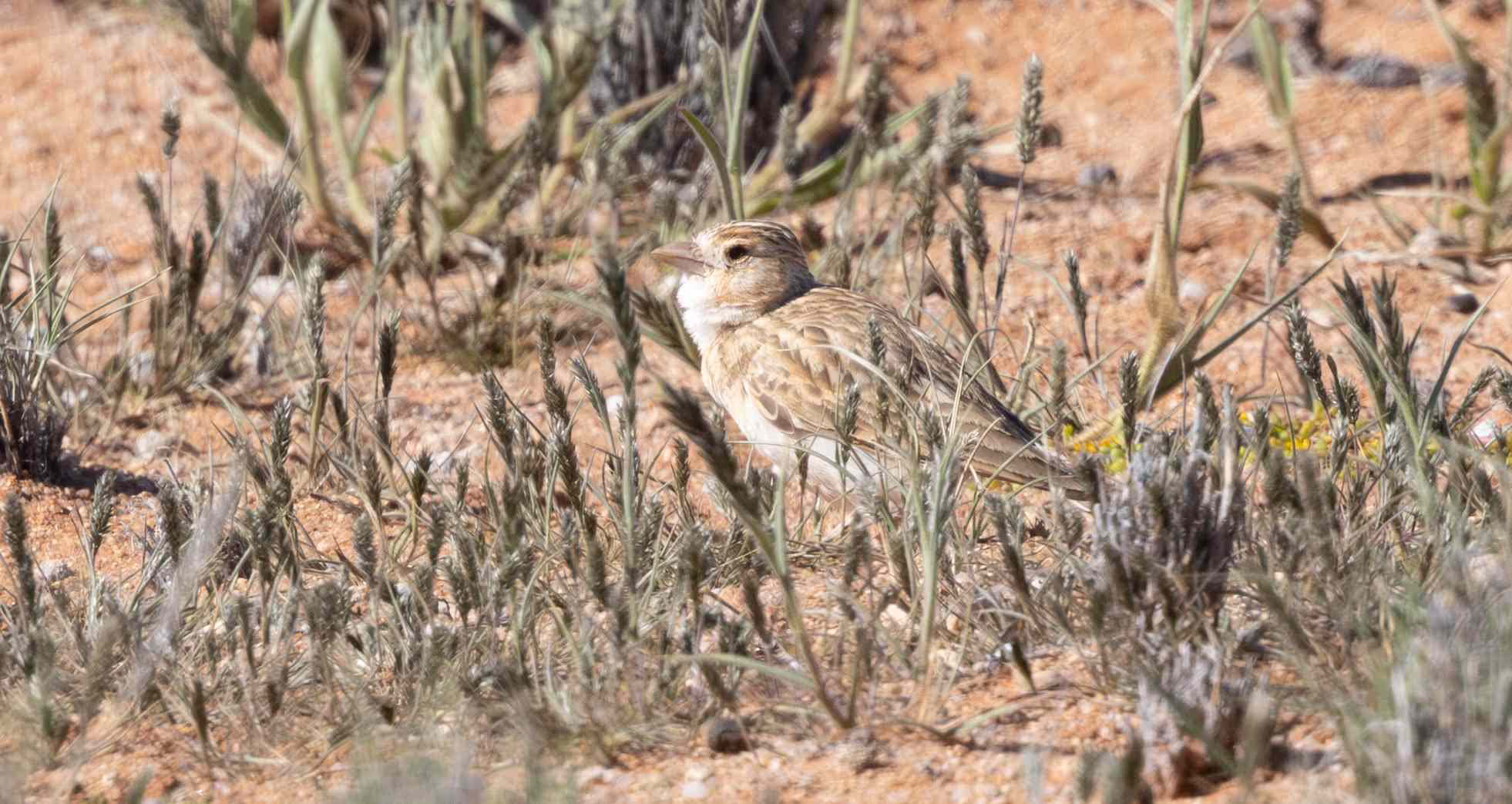
Although seemingly much quieter, the change also delivered some excellent birds: first a great South African bird in Stark’s Lark, expertly picked up by Tommy as it quietly worked its way along the ground. It is a true birder’s bird with very few features to latch onto for ID purposes, but the pale eye ring, bright white belly and, eventually, the chipping song as it flew up and displayed mutely for a moment, gave us what we needed. It was a South African lifer for me and deserved another round of high fives. The traditional round of drinks in the evening for lifers was starting to take shape.
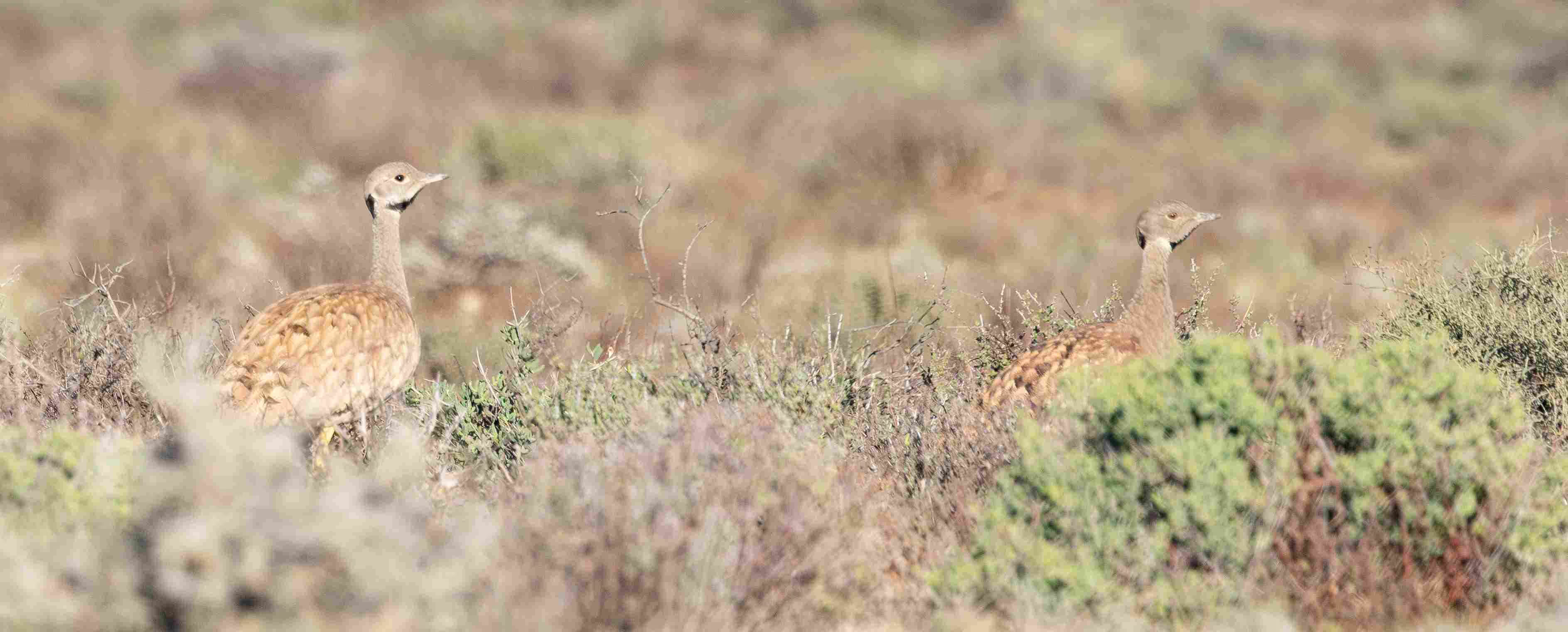
We added the expected Karoo Korhaans, Ludwig’s Bustards and Namaqua Sandgrouse, with several sightings of birds in the air and birds on the ground but they are amongst the shyest birds and photos were tough.
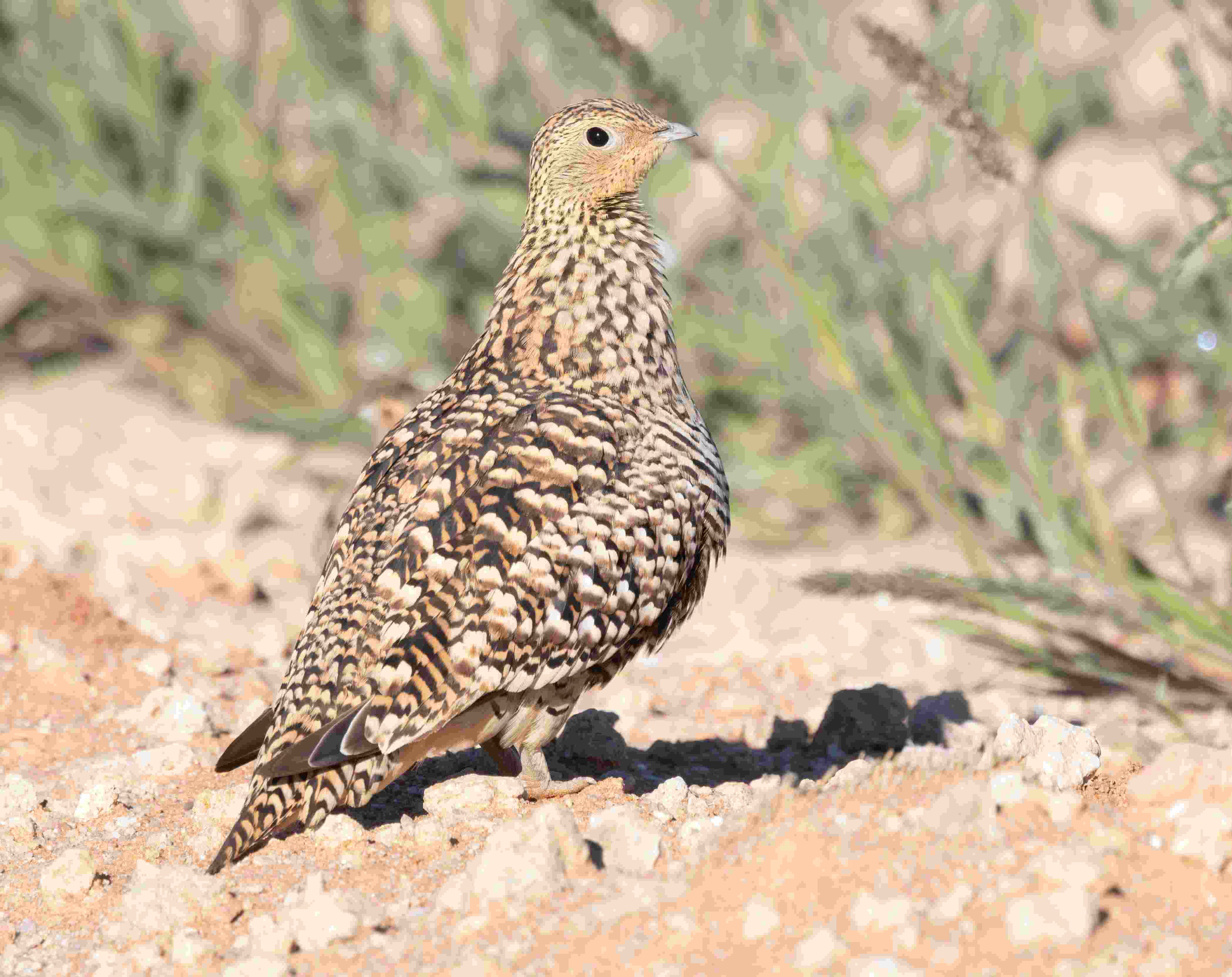
Shortly thereafter we had one of our best birds of the weekend with a pair of Burchell’s Coursers. It is always such an enigmatic bird, almost impossible to find when specifically looking for it, and then dropping in unexpectedly for a few minutes and soon disappearing again, as though it had never been there. This pair flew across the road, landed in an opening for great views and then they suddenly took off and flew into the distance. A minute earlier or a minute later on that section of road and we would have missed them.
An acacia filled river crossing added another habitat type, with a new suite of species, with Fairy Flycatcher, Acacia Pied Barbet, a small family group of Grey Tits and Pririt Batis. As hard as we tried, we just could not find a Namaqua Warbler, though.
We finished our day off back in Springbok, with a bit more time spent in the rocky hills and sundowners at a small wetland. It had been an incredible day of birding with all our targets found and plenty of lifers to toast as the sun went down.
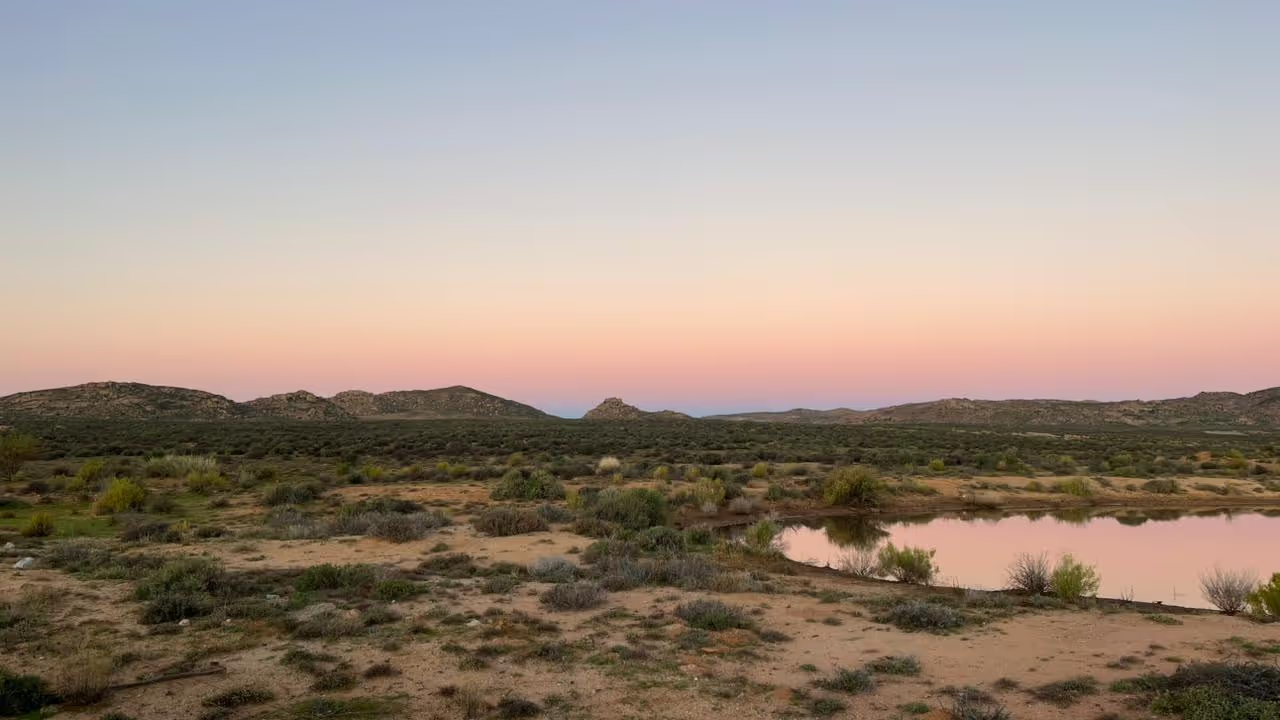
The other thing to toast was the addition of 32 species for my Autumn Challenge list, which took me past Stu and gave me enough to finish first in a Bindo Challenge for the first time ever.
I was obviously pleased to be on top, but I am very aware of the fact that the length of a list is entirely a function of how many places one can visit during the challenges. I had been lucky enough to cover enough ground, which meant my species count was fortuitously high.
We enjoyed a celebratory braai, but it was another early night so we had some time for a smattering of birding on the way south before the long drive home.
We stopped a few times on the way towards Kliprand (the Western Cape’s northern-most town) and the highlight was finding another pair of Red Larks near the Platbakkies Guest House. It was another extremely obliging pair, and so never looking a photographic gift horse in the mouth, I snapped away yet another bunch of photos. I am very pleased I did as it was fascinating to compare this bird to the one we’d seen the day before.
The red sand of the Koa Dunes has a far more richly coloured population than these more southerly birds. I was now doubly satisfied with the lifer photos that I had for this species.
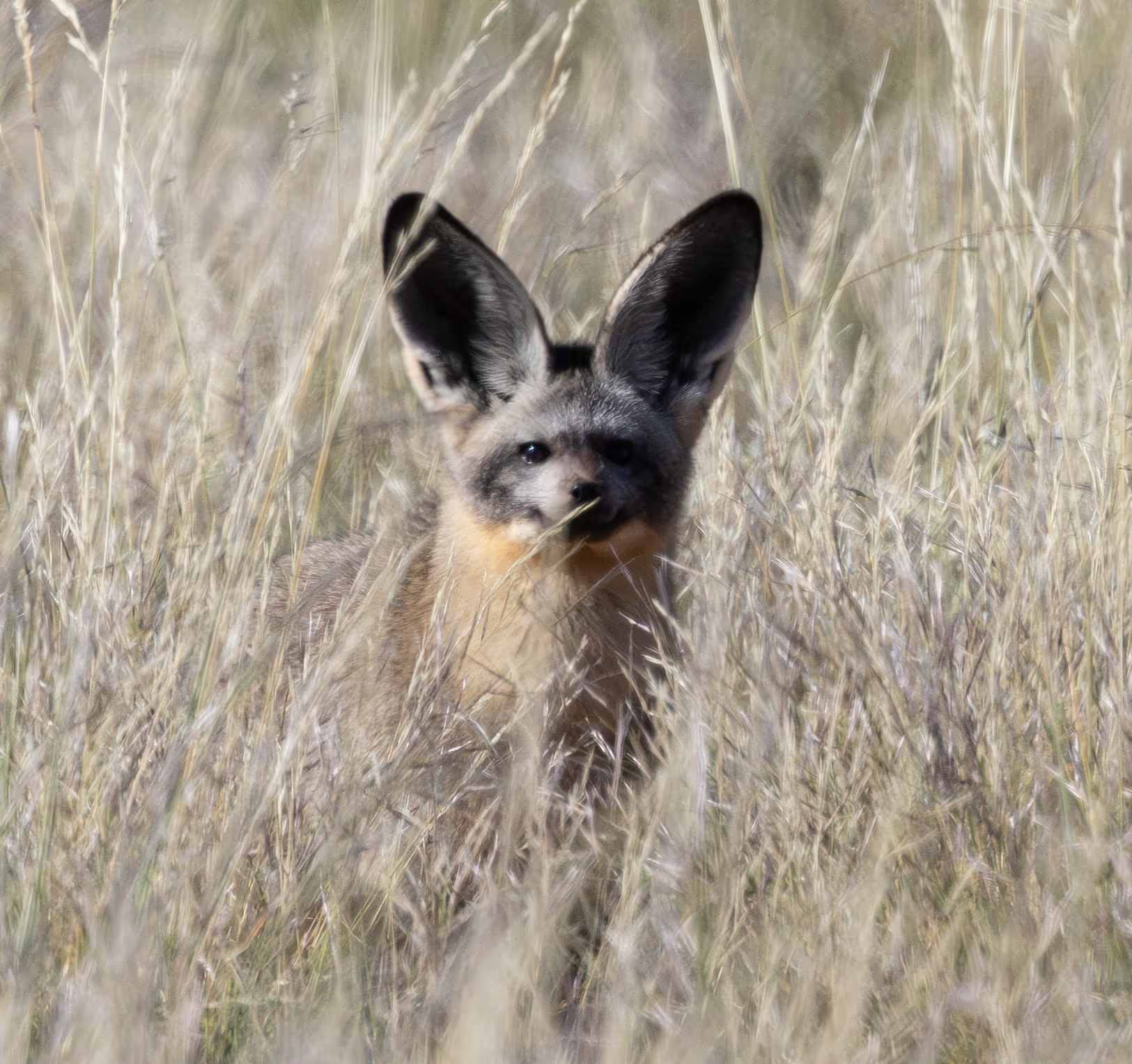
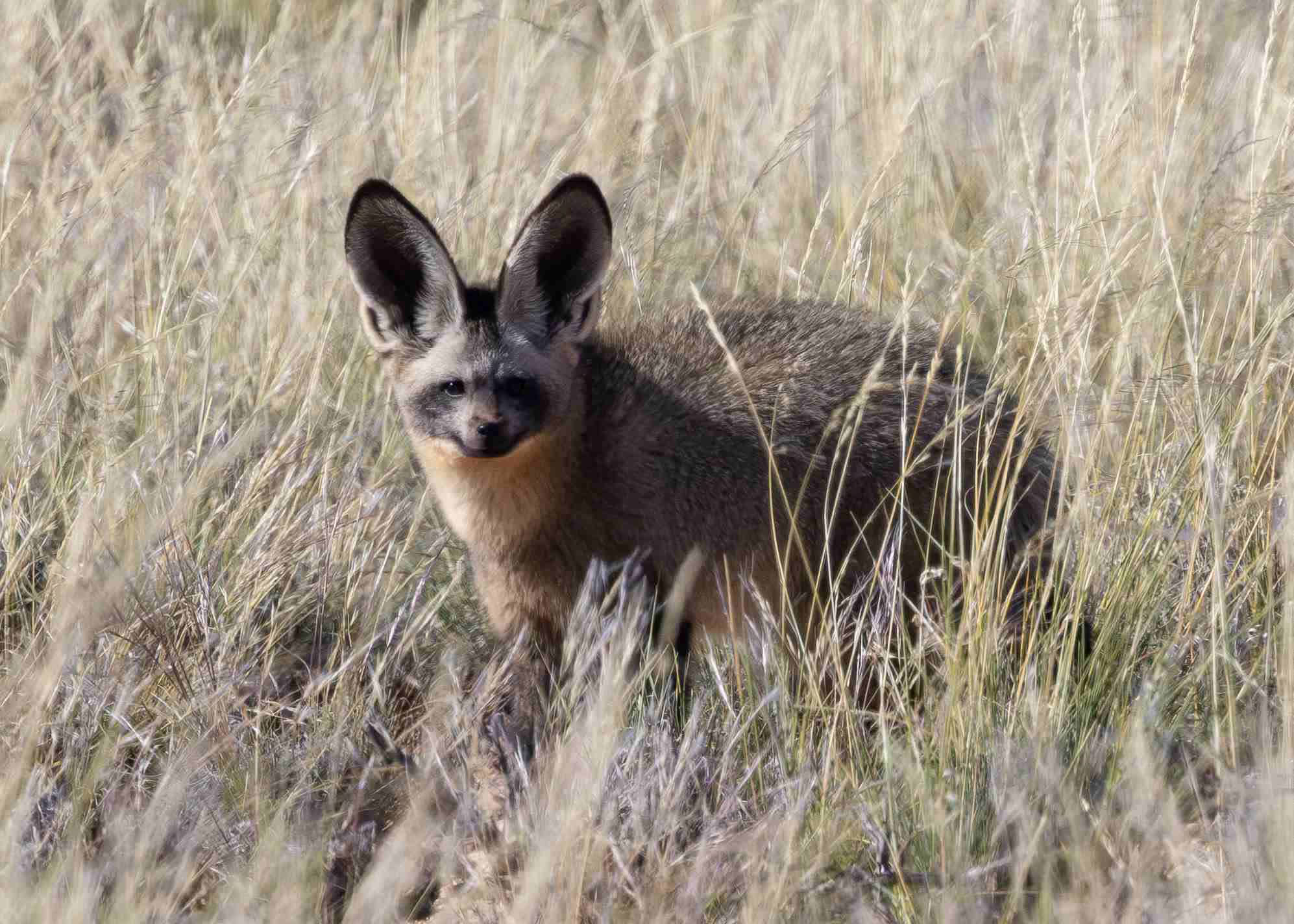
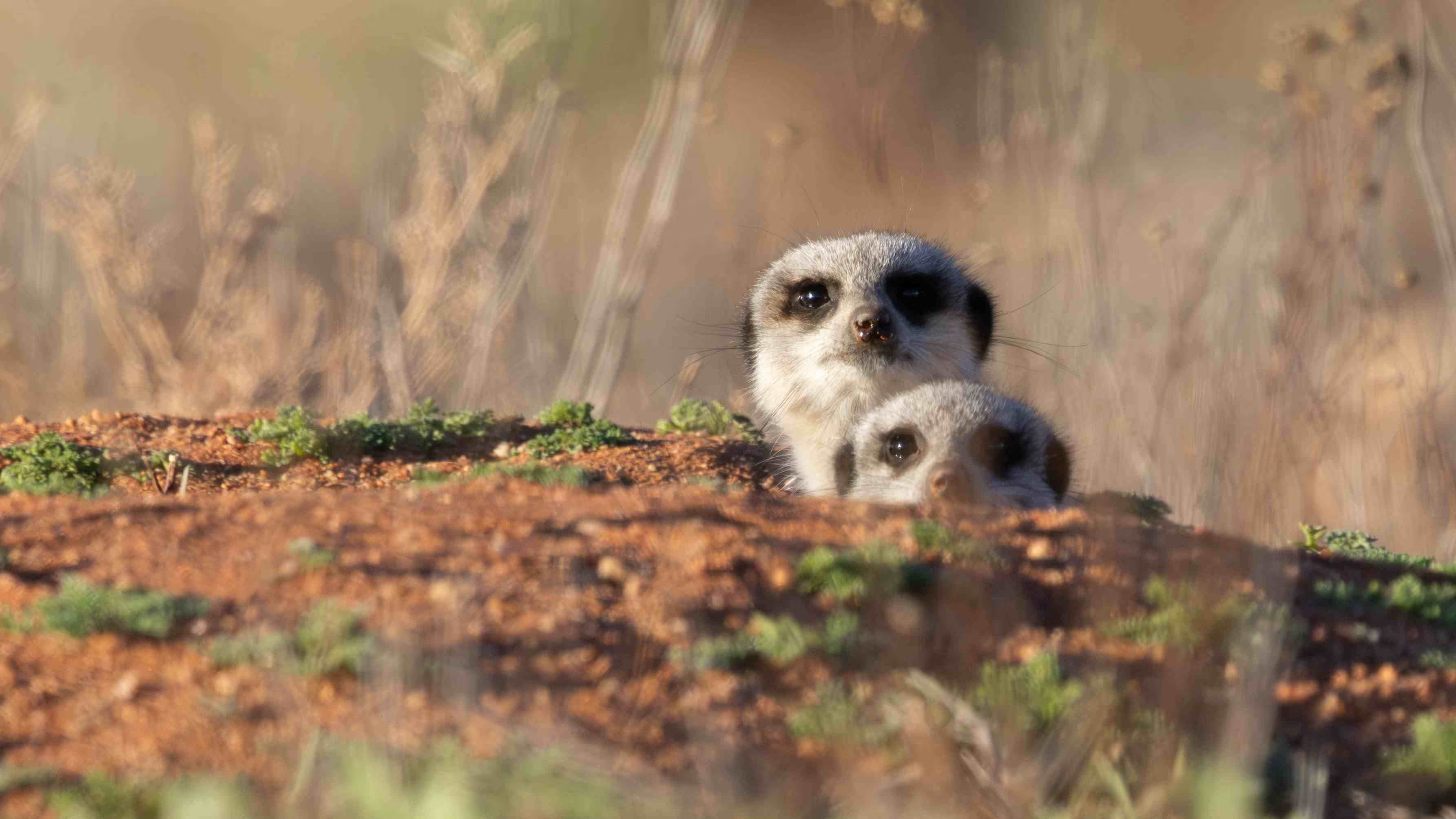
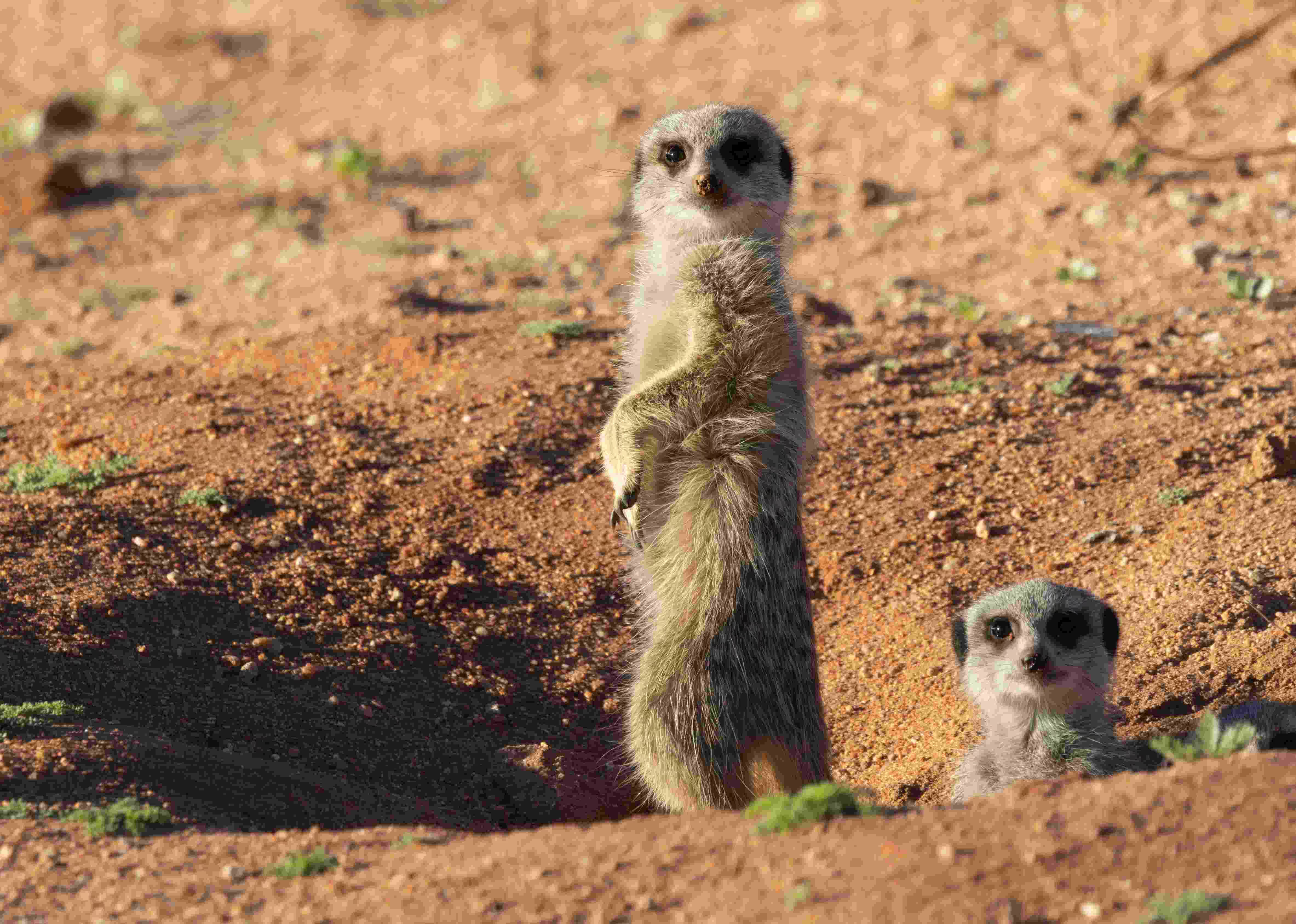
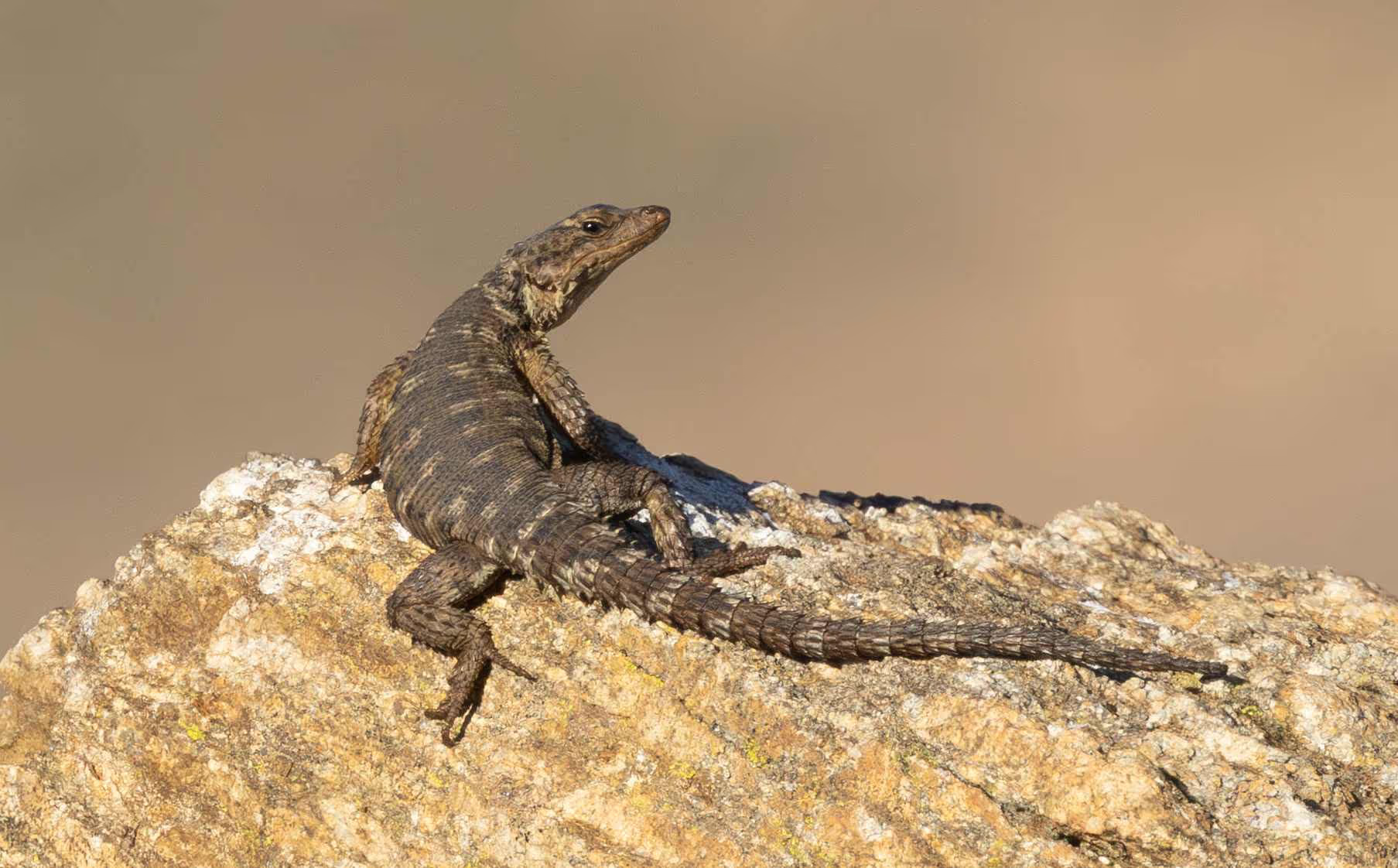
The other very appealing aspect of a trip to Bushmanland is the abundance of special mammals and a few reptiles too. It was a trip focussed on the birds but we still had a little time to appreciate some of these really special animals.
We finished off our trip with 127 species, a seemingly low count for three days of birding anywhere in South Africa, but that's the nature of a specialist area like Bushmanland. Even more evident of the nature of Bushmanland was that the 127 species included an incredible 36 Southern African endemic or near endemic birds.
Happy birding,
Mike
