Inside Bïndo
Bïndo Membership
My father plotted every family trip on a map that hung in his garage, a different colour for each one, until it became less a map than an autobiography written…
Robert Elliott28 October 20267 min read
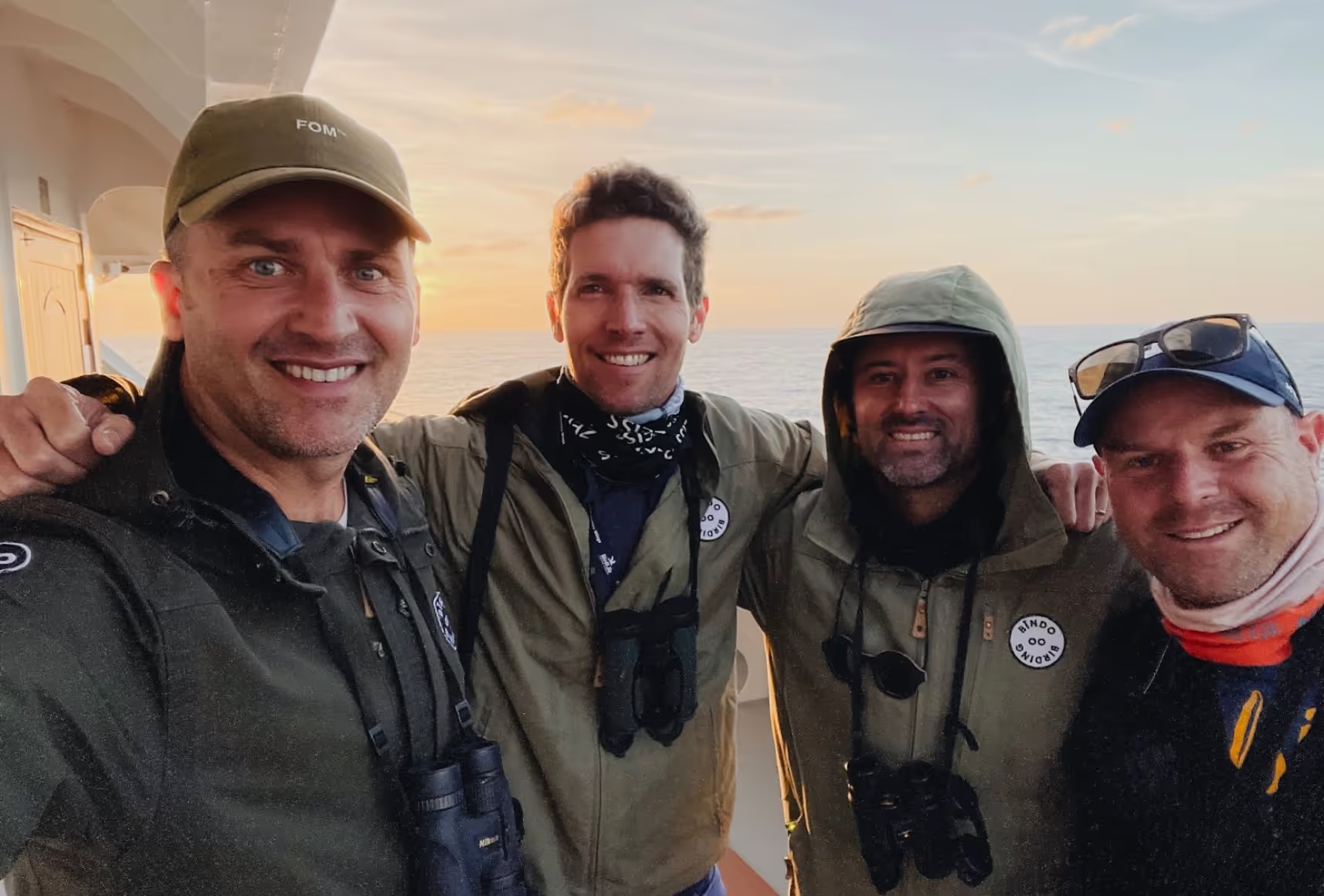
My father plotted every family trip on a map that hung in his garage, a different colour for each one, until it became less a map than an autobiography written in roads and coastlines. I've told that story elsewhere, and how it eventually became Bïndo. This is about a different part of it: how we keep Bïndo going, and who gets to shape where it goes next.
Bïndo has been free since the first sighting was logged on it, a Hadeda Ibis, in December 2020. Free isn't quite the same as costless, though. The cost has been carried by the founders, by a small team working evenings around a coffee table, and by the ordinary running of a thing that has to stay up whether or not anyone went birding: servers, maps, and photographs that have to live somewhere and stay there. All of it gets more expensive as more of you use it, which is a nice problem to have.
So we always knew Bïndo would need support. The question was where it should come from, and what it would ask of us in return. There are two usual answers, and we looked hard at both.
Advertising
An app funded by attention has to farm attention. It needs you on the screen, and for longer than you meant to be. Every design decision slowly bends towards that, usually without anybody in the building deciding to be villainous about it.
We've spent nearly six years pulling the other way. The work we've done on speed and prediction, getting the right bird to the top of the list before you've finished raising your binoculars, is there to give you your morning back, so more of it goes to the bird and less to the phone. One well-placed banner would undo that, and the second would be easier to justify than the first.
Selling the data
Birders produce valuable data: where a species was, when, in what numbers, and how that's changed. There's a market for it.
We do give Bïndo's data away, to one place today and for nothing. Atlas lists logged on Bïndo flow into SABAP2, the Southern African Bird Atlas Project, one of the most important citizen science datasets on the continent. Nearly six thousand atlas cards have gone in that way, from about two hundred atlasers, and SABAP2's records in turn help Bïndo check sightings and suggest what you might see. That's a gift both ways, freely made, and it stops being one the moment there's an invoice stapled to it.
Some records should never be for sale at any price: a nest site, a roost, the coordinates of a bird that a certain kind of person would travel a long way to disturb. Birders who trust us with those sightings are entitled to assume we're not monetising them in the background.
Members, not customers
Which leaves the older arrangement, the one that came before all of this: a thing is carried by the people who care about it. The word we chose for that matters more to me than the arrangement itself.
A subscriber is what you are to a magazine: a payment, a delivery and very little else. A customer is worse. It casts us as a shop, with Bïndo on the shelf and you deciding whether to pick it up.
Birding here has never worked that way. It's been carried for decades by people who did a lot more than take part: the atlasers filling in pentads nobody else would drive to, the record keepers, the ones who've run their club's outings since before anybody owned a smartphone. Not customers of birding. Members of it.
That's the relationship we're asking for, and it's about more than access to features. What you're really deciding is whether the work is worth supporting, and whether to keep it going.
Members get a real say in what we build. Bïndo has always been shaped by birders telling us what we got wrong, and members are the ones we'll ask first, and properly. They'll see new work while it's still rough enough to change, which is when an opinion is most useful.
Members get exclusive events and prizes too. Bïndo has always been at its best when it gets birders together.
What membership builds
This is the part I want to be exact about, because it's the question I'd ask.
For the foreseeable future, membership won't pay the team. The hours we put in are given rather than charged for, and membership doesn't change that.
What membership does is pay for everything that can't be volunteered: the servers, the maps, Bird Call ID, and the storage that keeps two million sightings and their photographs safe. Enthusiasm doesn't pay for hosting, and until now all of that has been paid for privately.
After that, it pays for growth: more of the region properly covered, more countries, more languages, more of the areas and habitats that matter. Bïndo was conceived in the spirit of a conservation trust. The aim was always to bring more people to birding and to leave the region's birding stronger than we found it, rather than to build a nice app for the birders who already have one.
So membership goes into Bïndo rather than into us. I won't pretend that holds forever, because one day Bïndo has to be able to outlive the spare evenings of a handful of people. When that changes, we'll say so plainly and in public.
What membership doesn't change
Membership only makes sense if the free app stays worth using, so here's what stays free.
Atlassing stays free. Contributing to SABAP2 was the point of Bïndo before it was ever a business, and putting a price on citizen science would make no sense.
Your sightings are never held hostage. Every sighting you log uploads and syncs, whatever you pay us, and you can export them to eBird or BirdLasser from the app. A birder standing on a mountain with a day's records on their phone isn't a commercial opportunity.
Logging sightings, keeping lists, taking part in public challenges and your life list all stay free. The core of Bïndo, the reason you downloaded it, stays open to anyone with a phone and an interest in birds.
The next chapter
What we're after is simple enough: we want birding to be fun, and we want a lot more of it.
Birding gets you up and out, paying attention to the sights and sounds of the natural world, and that's good for you, especially when it's done with friends.
It's good for the birds too. Every sighting logged is a small piece of record keeping, and enough of them together become the evidence that conservation runs on.
So what we're really building towards is people out there with their friends, debating a call at the edge of a reed bed, driving further than was strictly sensible to somewhere they'd never heard of, and finding a bird that stops them where they stand. And more people who know one patch well enough to notice when it changes.
Members are part of that, and help us write what comes next. If that sounds worth supporting, we'd be glad to have you along.